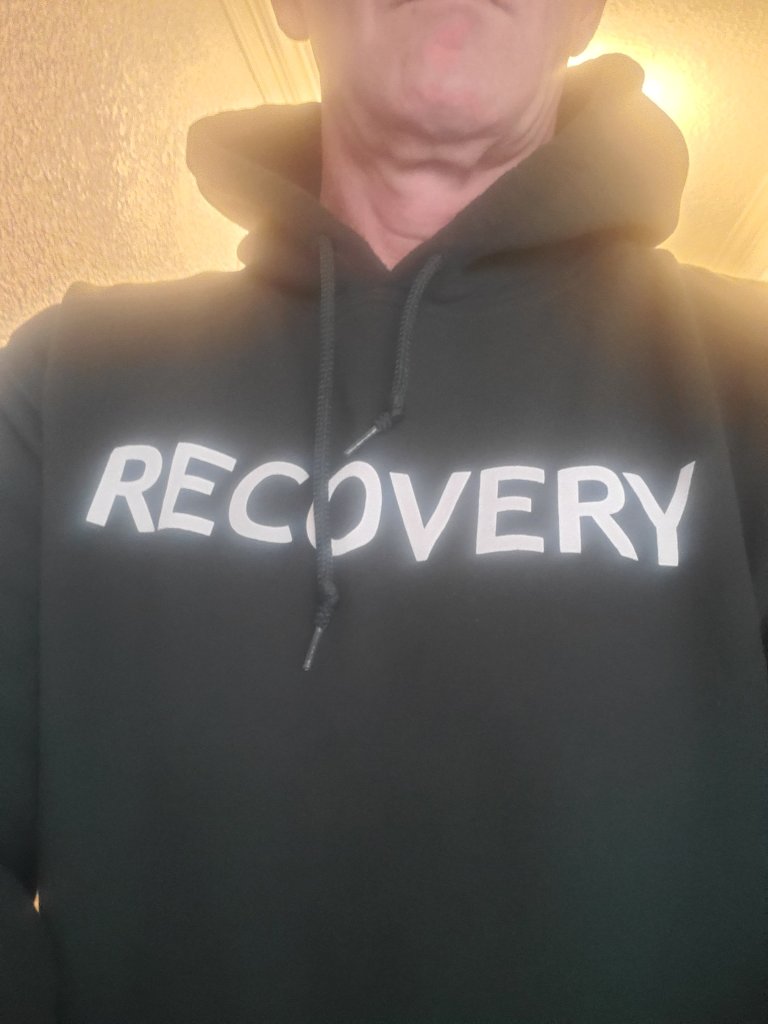
“It only took 30 years, but now I can say it.
“Not in a joking, out with the boys kinda way. A laugh line that elicits guffaws and a toast.
“But in a way that is striking with it’s simplicity and power.
“I’m Shane. I’m an alcoholic.”
Much thought has gone into how best to open this post. Try for cleverly witty or maybe distressingly profound or would sadly reflective work best. Then a memory, the simplest of words penned just five days into my stay at Cedars at Cobble Hill. Real, raw and true then and as valid today, one year into sobriety.
It’s not as if the thought that I had a drinking problem had never crossed my mind. It dwelled in the corner of my brain and soul for years. The activity, the behaviour, all led to one destination. However, it was easy to take a side-road to lengthen the trip, think of it as trying to avoid a road check.
Half-hearted attempts failed, taking the needed steps skipped over due to a lack of courage. But friends and co-workers (really both at once) stepped in and forced the situation. Call it intervention, call it ultimatum or kick in the ass. It was an opportunity to be grabbed by a man thirsty for not a drink.
Everyone arrives at Cedars in different ways. Some propelled by inner strength, others by guiding hands and others with great reluctance. Tales of people drinking on the ride to the rural setting of the facility or taking one last hit in the parking lot for nerve are legion. I entered with a sense of relief, knowing it was the right time but frightened by the work ahead. Not just admitting the problem but delving into the past that had been so neatly sequestered away.
It’s easy to convince yourself it’s not that bad, you’re not as bad as that person or that person. You haven’t hit rock bottom and you can deal with it on your own, as others really need the support offered by counsellors.
A poem, though, began to change the self-image.
It was a Saturday, where all residents gather and participate in a group activity. This occasion was poetry writing, many so heartbreakingly sad as they recalled and totalled the losses of their addictions. An unlikely one is etched in the memory.
Roses are red
Violets are blue
I’m in rehab
And so are you
We were all equal – our progress in life was measured by the simple fact we were sharing rooms in the log lodge of Spruce House, that from whatever highs we had achieved to the lows we were arising from there was a sameness when you cut us. We were all equal in needing the community that is Cedars.
Another woman, who had just joined our home group (a small grouping that you spend the most time with), drove the knife deeper. Emanating fragility, she seemed to be in her own world – freed from the conversations we were having. One of the weekly tasks in home group is telling how things were going in your recovery, then then rest of the crew offer one-word blocks or resources (what’s getting in way of recovery and what’s helping). And even if you’ve just arrived, you participate. So, when this woman’s turn was approaching, I suspected she would pass. Instead, she surprised.
Like an art restorer, who knows there’s something worthwhile under the painting, she stripped me bare. Not using the cheat sheet of words that were familiar to all of us, favouring to draw on her experience and call bullshit when she saw it – in a way that was imbued with wisdom and not a hint of anger.
That was reinforced by another woman, who after hearing my ‘story’ for the first time just peered over her glasses and in a soft voice said, ‘I didn’t feel it, there was no connection.’ And she was right.
It’s so easy to craft a narrative, especially when that’s your job and a facility with words is one of the gifts that have been bestowed on you. Acknowledge the flaws, make it seem oddly romantic and drop a few self-deprecating remarks to bring people along for the ride. It’s smooth, believable (especially to you) and just a façade.
A few weeks later, after many sessions with various groups and counsellor, it was time to retell the story, in front of a larger group and without a lot of prior notice. No chance to really prepare, to edit and work out the material. Just do it.
I did not enjoy it.
But it was cathartic. It was the moment I’d worked assiduously to avoid since arriving. Pen to paper, not a problem. Share quickly in group, easy to do. Emotionally open, no thanks.
Admit the litany of failures that hurt family and friends and deal with fact that cosmetic changes to appearance are not a substitute to beginning the process of healing. By the end, I felt spent and, thankfully, hugging was not taboo.
And it is a process. Being at Cedars is relatively simple: you can’t drink or do drugs, everyone is supportive and the outside stresses can wait. The fear is what happens when you walk out the gate. It was relief coming in and discomfort abounded when leaving time approached.
Would fate be tempted? Was I fixed? Had I dealt with the devils in the past? Was it like cancer and if you cut out the mass of misery then you’re cured? How do you handle all the eyes on you? Do you tell people you can’t drink?
One alteration in philosophy, for me, has been key: Can’t drink versus don’t want to drink.
Can’t is like a red flag, covered in the sweet taste of nectar and in a vault where entry is not that difficult.
Don’t want to drink is my decision. Each day I make the same decision. It’s comfortable. I don’t need to explain, unless I choose to.
This story is short, though for you the reader it might not seem so. There’s no litany of escapades and that’s by design. It’s not a competition and every journey is different – the particulars of how we arrived don’t matter, it’s recognizing where we have arrived. Maybe I’ll write about this topic again. Possibly I won’t. I just know that right now is the right time to share this portion with a wider audience.
So, what wisdom has been gleaned after a year? It’s hard work, maybe not in the way you imagine. No waking up in a sweat after a dream about a pint. No longingly gazing as a wine glass gets refilled at dinner with friends. The sweat comes in discovering the balance that works for you, that upsets some of the old habits: for me that’s running, yoga, Wednesday ethics meeting, golf, baking and reading.
The most challenging component: communication, it’s keeping an open heart and finding the willingness to share.
One of my bad habits is erecting boundaries, not wanting to be a burden on others and opting for lonely brooding with multiple eight-packs. I endeavour to now let others set their boundaries, let them decide how much they want to hear and have discovered people don’t see it as an extra weight but an opportunity to help someone.
Which is not to say I’ve mastered it. I have not. But I try. Every 24 hours, I try.
At Cedars, the word FINE is basically outlawed. You can’t say you’re fine as it means Fucked up, Insecure, Neurotic and Emotional. It means you’re not dealing with the issues in life, that you’re trying to sweep challenges aside and hope they evaporate.
This pandemic has been hard on many, forcing them into isolation and situations never faced. The pressure can be immense and the desire to pull back, to keep it all in and become a brooder is immense as no one wants to believe they are a millstone to others tackling similar challenges. Saying your fine seems the simplest option.
Being fine isn’t anyone’s reality currently. Sharing though can get you through it. On offer here, two ears to listen and one mouth that will remain zipped. Cause sometimes all you need is to be heard, without judgement.

 On the Right Side
Leave a comment