Author: shanemills

  • Four reasonS for running

    IMG_20180819_114149

    When it is discovered that I like to run, there are always two questions. But they are, for me, the wrong ones. The real question is: why would I stop?

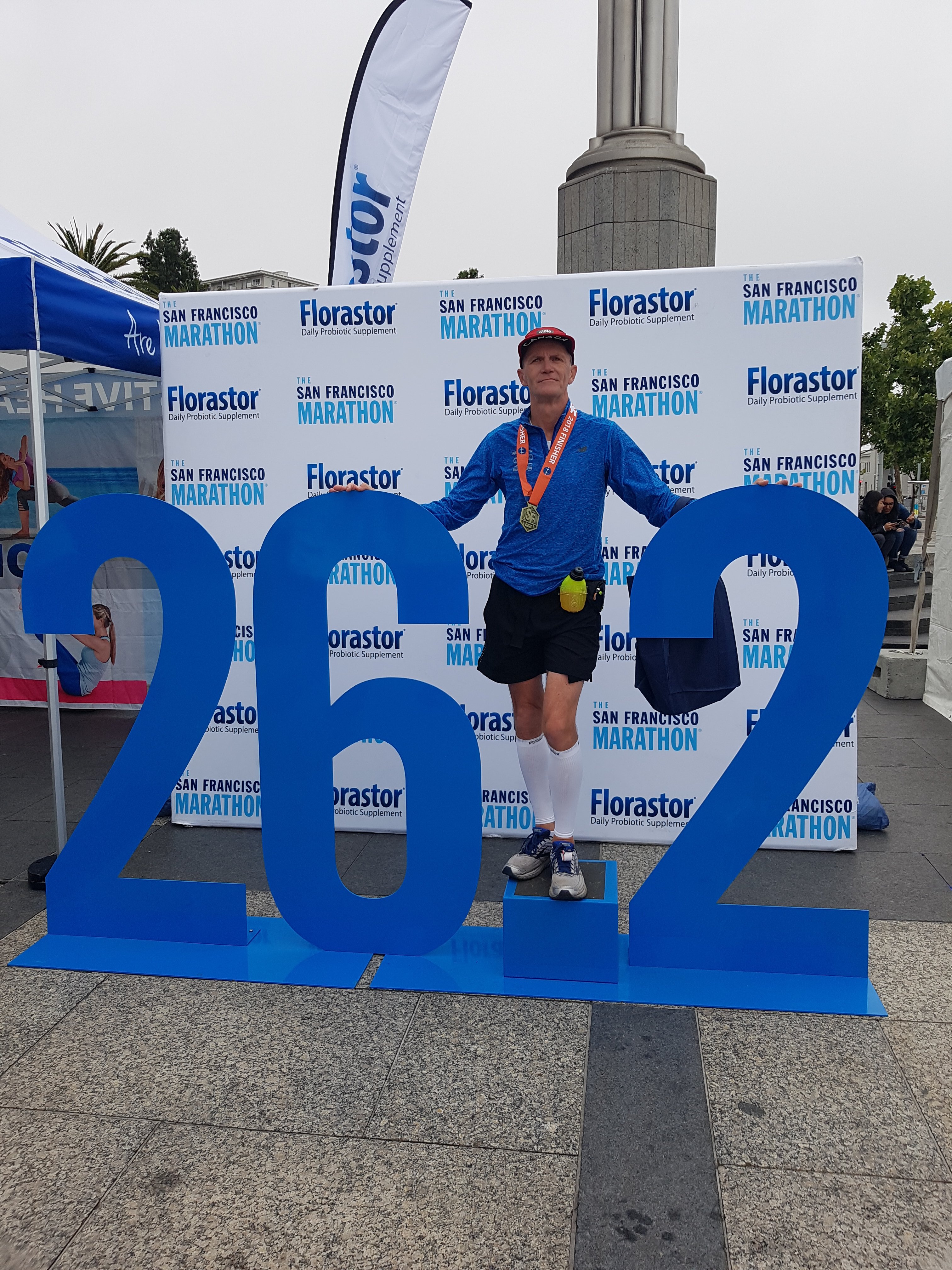
    Most recently, it was while enjoying a rich dinner in a San Francisco eatery. This place is a place that travellers drop into and locals use to commemorate milestones – for us it was both. First trip to the City by the Bay and the marathon (first outside of Canada) completed. The couple seated to the right were celebrating her birthday.

    Conversation began with usual information exchange: where are you from, why are you here, what do you do. The fellow was an ex-Marine, with ink bleeding out from the tight line of the short-sleeved shirt established around his bicep. He was fit, without doubt. Those arms the size of my thighs, maybe bigger. But to him, the 26.2 distance was something mythical, he wasn’t fit enough to manage it. Except, there’s different types of fit. Told the fellow that, as an example, pretty sure I could only manage one chin-up, while he could do a host of them – even with me hanging off his back.

    His partner asked the ‘what do you think of for such a long-time’ question. Which is a fair question. Music helps. So does just taking in the scenery, seeing new things or old sights in a different light. But the alone time is just that – it’s your time. For someone who is a bit of an introvert and doesn’t mind the silence, a long run can be fruitful. Questions asked and answered; some real, some fantasy (yeah, Leafs can win Stanley Cup this year – which category is that?)

    The answers to the common questions, even as the word come out, don’t sound that convincing. Trite, almost. As if read in a running magazine. It’s difficult to explain the why and then it dawns: forget the ‘why do it’ and focus on ‘the why stop.’

    There are four reasonS reasons to not continue the journey that running leads me on.

    Slim: Fairly obvious one. Shedding pounds was the major factor in leaving the couch and trying to get around the block. And it has worked. Down probably 75 pounds. Feel healthier, possess more energy and clothes fit. It wasn’t all the exercise, as it had to be done in conjunction with diet. MyFitnessPal was an invaluable tool in tracking diet (throwing up a few shockers as to what is healthy and what isn’t), as was SkinnyTaste cookbook that showed food doesn’t have to have taste and texture of drywall to be healthy.

    Sober: It’s called a beer belly for a reason. Pregnant women used to compare own progress against static size of mine – won all early rounds, I did, and even beat a few who are just about ready to birth. To say a drink was appreciated was an understatement – a side-effect of two careers that have drinking culture while remaining largely sedentary (journalism and politics). Running has meant discipline. No need for one or two every night, at pub or at home. Have to get some mileage in or go to yoga. A friend saw the screenshot on my phone – ‘a picture of yourself, really?’ Yep. It’s a shot of latest race as reminder of the steps taken and not wanting to go backwards, especially when perched on a barstool.

    Sane: Maybe it is a result of being an only-child but solitary time is not frightening. In fact, it is welcome – a respite from the craziness and quickness of the world. Always being bombarded with information and stimuli, a run offers a break. Doesn’t matter if it’s just 30 minutes or three hours, that time on the pavement is yours. And the data being absorbed is restricted: some tunes and what your mind generates (guilty, I am, of flooding my own mind with material when not running as the Samsung is always pointed at face, with fingers redirecting from website to website as tangents pop up).

    Non-Smoker (mostly): Okay, hesitated here. For years, was a Shane-smoker – which is lighting one up off the end of the other. Then quit. Then Vegas and recaught the bug a bit. So went from a cig snuck on a night out to full bum mode to ‘owe you a pack, so let me give you this one’ mode. The worst part is I didn’t really feel it in the lungs. But the legs is where it made its presence known. Poison seeping through. As an old man running, only have a few years to make improvements and no need to self-sabotage. So, yes, refocusing on being non-smoker.

    There was one question that was more unspoken in early years – you’re a runner?

    People were too kind to explicitly phrase it that way, but the eyes don’t lie. This fellow with chipmunk cheeks and hosting an industrial-sized tire around the waist is a runner? Does he carry his health card with him?

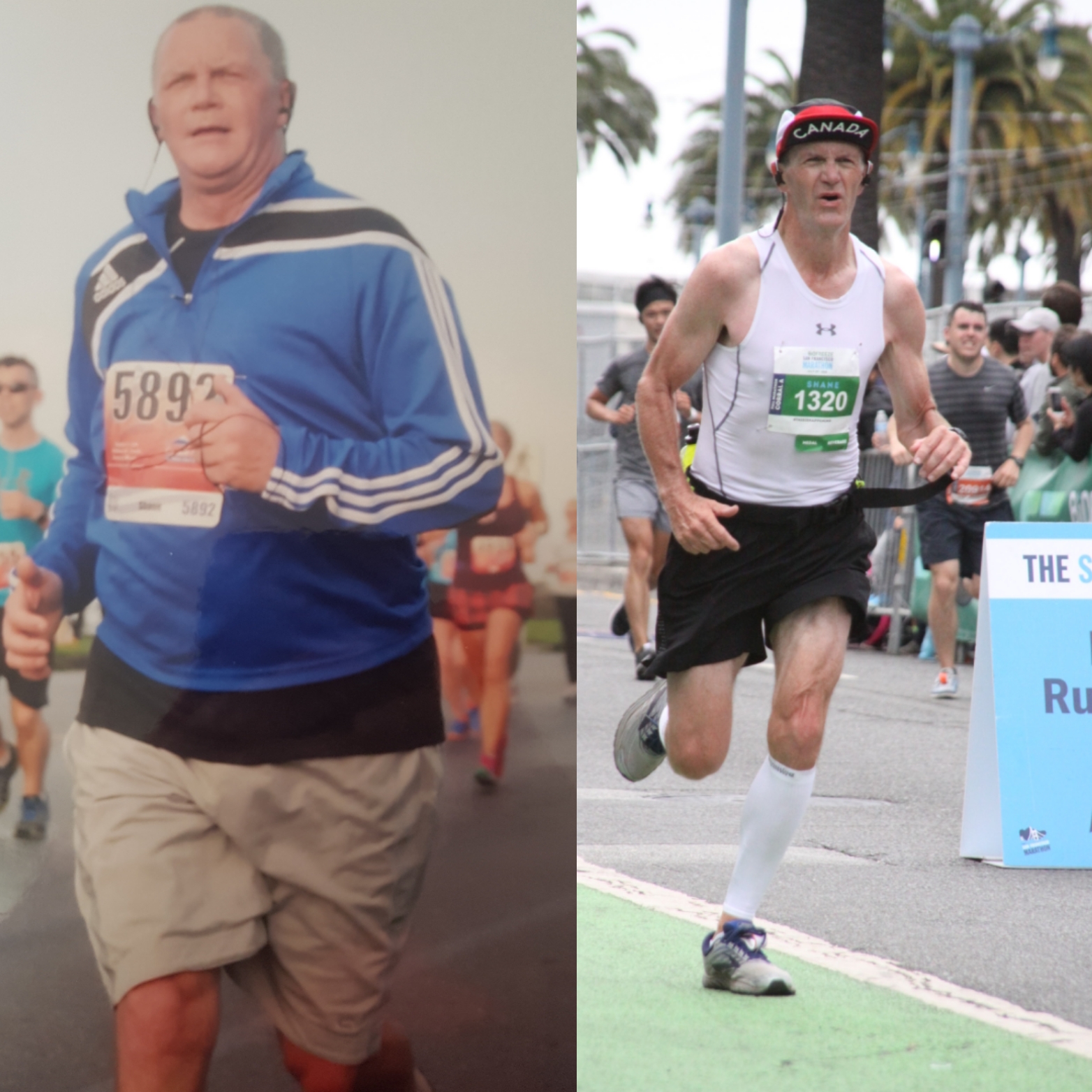
    The worst part is they were kinda right. In my mind, I knew I was a runner; but the body had forgotten what it once could do. Pride wanted to skip the run/walk part of getting back into shape; reality had different ideas on how long it would take. Some of the early jaunts around the neighbourhood were harder than anything done now. They set the foundation and now can build on it.

    So the why I run is simple and so is why there’s no stopping.
  • Searching San Fran’s secrets (by foot and mouth)

    Spooky. That’s the image that is now ingrained of San Francisco after a three-hour tour. And, to be fair, not entirely spooky – also sinister. San Fran is a city that has its secrets shrouded.

    Having never been to the City by the Bay – an image was built through books, movies, television and Hearst history – the city’s rep was odd combo quirky and techy, liberal and elite.

    What would Sam Spade think of Lyft? Probably a thumbs up. Full House is likely thumbs down. And Bullitt – he’d want to drive the Mustang but would understand why Steve McQueen deserves respect.

    When the decision to travel south for first destination marathon was made, San Francisco was easy choice; but six months ago picking the distance was difficult with options of the full or two separate halfs that largely replicate the full route.

    At this point, was still hoping for Boston qualifying time at BMO Marathon in Vancouver, which alas did not come to pass. However, it wasn’t worries about times that led to the full marathon, it was much simpler: why go all that way and not see the whole damn city. Run over one of the most iconic bridges in the world and traverse world famous neighborhoods like Haight Ashbury. Only made sense.

    The plan was always for this adventure to be equally about travel and running: dubbed it travrunning.

    Key component of planning was the race. What secrets would the early morning give away that are overshadowed by the vibrancy that ensues as the population comes to life. Very few, it seems.

    Starting the race along the waterfront is cool, with mist mingling with fog before sweat even breaks. The Bay Bridge can be seen, fairly crisply.

    As the route winds through Fort Mason, after first incline, there’s a downhill and a glance to the left reveals a residential enclave. A chance to see if anyone in San Fran is up this early. Thwarted, though, by the fog- the ground floor seems to separate from the stories above. No lights are seen through the curtain.

    From there on to the Golden Gate Bridge, with a couple of hills acting as welcoming party. Approaching the bridge, nothing suggests it is an icon- it would appear to be a flat Soviet-era design. Once the deck was accepting the pounding of thousands of pairs of feet, a little of the majesty is sighted. What isn’t? Alcatraz. I know it’s there but from the vantage point of the bridge, The Rock has disappeared.

    The rest of the race follows a familiar pattern: the immediate is stunning, the promise of more only hinted at.

    Another thought: Vancouver is sited in a spectacular setting. Stanley Park, the bridges (particularly Lions Gate) and the mountains create a visual allure few can match. Drawback: Van doesn’t have the history and heritage buildings that would incite people to climb massive hills of concrete.

    And while it seems the race has taken precedence over travel, not really true. Culinary treats have taken center stage. John’s Grill has best chops ever, plus the legend of The Maltese Falcon. Market Bar on waterfront, toned down tourist trap. Kokkari was the best Greek food, playing into no stereotypes. Anzu served up a brunch earned after 26.2 miles (we weren’t only competitors dining). And Gary Danko is on agenda. Plus with two more days there are some brewpubs and small eateries. Along with Jays game in Oakland.

    Verdict is clear: travrunning will continue. Maybe even Boston, now that the qualifying time is secured.

  • Being a travrunner is tough

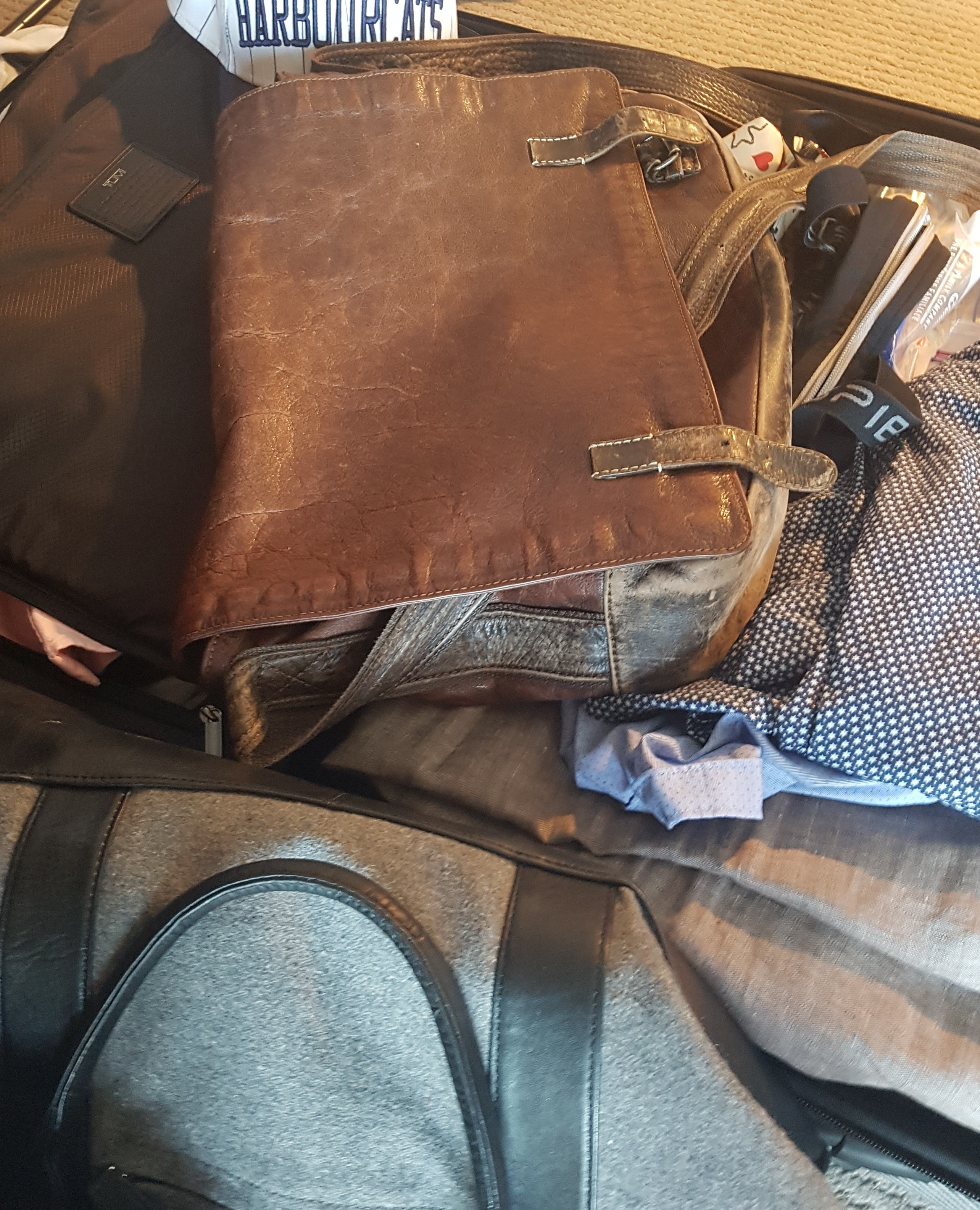
    20180726_185721.jpg

    Vacationed in another country? Check. Travelled out-of-town for a race? Check. Then why is the mind racing with abandon as a combination of the two is nigh? It’s much more taxing, lists are made and items crossed off, then double-checked; damn, going to need a break to recover.

    This is where we are at, dear travellers and runners. Tomorrow a flight to San Francisco will be caught, Sunday a marathon will be attempted, Monday a Jays game captured and Tuesday evening back to Victoria.

    Normally, packing for vacation is easy. Pair of shorts, one pair of linen pants, swimwear, some t-shirts, one dressier shirt for dinners and rain jacket. Oh, a hat as well. Plus couple pairs of shoes – espadrilles, sandals and running shoes. That’s the standard for the annual trip somewhere hot, damn hot.

    And all of the races outside of Victoria have been in Vancouver – so a journey by ferry or seaplane, requiring only one night away from home. But even then there’s a backup for everything: socks, KT tape, Voltaren, hats, shirts, ginch and shorts. Call it a superstition, but I like to be prepared. However, the closeness of home and familiarity with Vancouver shears it so no real peril exists.

    Combining the two, though, is proving exhausting.

    There’s only so much suitcase space and conflicting needs. And the fault clearly lies with San Francisco.

    Putting the race aside, for a moment, the city is a smorgasbord of attractions. As a lover of crime noir and Bogie, dining at John’s Grill is a necessity – so can’t show up in flip flops. Then there’s the fine dining aspect, where Gary Danko is on the agenda and that requires more than dress shorts. Staying downtown, walking the neighbourhoods and hitting restaurants like Kokkari Estiatorio and Anzu before scoping out funky bookstores & boutiques, then some comfortable shoes and shorts are required. Then there’s just the weather: sun or rain, warm or cool – stay awhile and it could be all of the aforementioned according to people who should know. So need jackets and umbrella.

    Then there is the race itself. In the definitely must pack category: singlet, sleeved-shirt, warm-up jacket that can double as rain protector if needed; shorts, back-up shorts, compression shorts, two pairs of socks (one thicker than other); and the ‘bag’ – which contains all the accoutrements needed to prepare – oatmeal (taking my own), granola bar (again, taking one my system is acquainted with), tape for knees, some Vitamin I, bandages, gels and Nuun for water bottle.

    See the challenge? Air Canada allows one-checked bag and one carry-on bag. Still not accounted for in what must be lugged aboard: running shoes, utility belt and caps. Plus, want to take my man-bag with me. And need a few books for the flights.

    But then, like a dream, an email from Aeroplan, that answers the question I didn’t know I was really asking.

    Let’s make sure you’ve got all the information you need to take off to San Francisco, stress‑free.
    Below you’ll find important last‑minute information and tips* to get you on your way:


    Know what to pack and when to stop: 

    Wondering how much is too much? The allocated limits for Air Canada passengers are as follows:


    Carry‑on baggage allowance
    Standard article
    10 kg (22 lb.)
    Max size L x W x H
    55 cm x 23 cm x 40 cm
    (21.5 in. x 9 in. x 15.5 in.)

    Personal article
    10 kg (22 lb.)
    Max size L x W x H
    43 cm x 16 cm x 33 cm
    (17 in. x 6 in. x 13 in.)


    Wanted to race to the music player and start blasting Jeff Buckley’s tribune to Leonard Cohen. The answer to my prayers. Carry-on bag and man-bag are each allowable – which means nothing gets left behind.

    Then an idea: what if the carry-on bag heads south nearly empty and becomes full as time goes by in San Francisco? Looks like a lot (of $) might get left behind in the City by the Bay – with apologies to Tony Bennett.

    But now, it is too late to worry. Time to be adventurous and see what happens. Bags packed, race ahead – that’s the plan.


  • Drone, no more, in short-sleeves

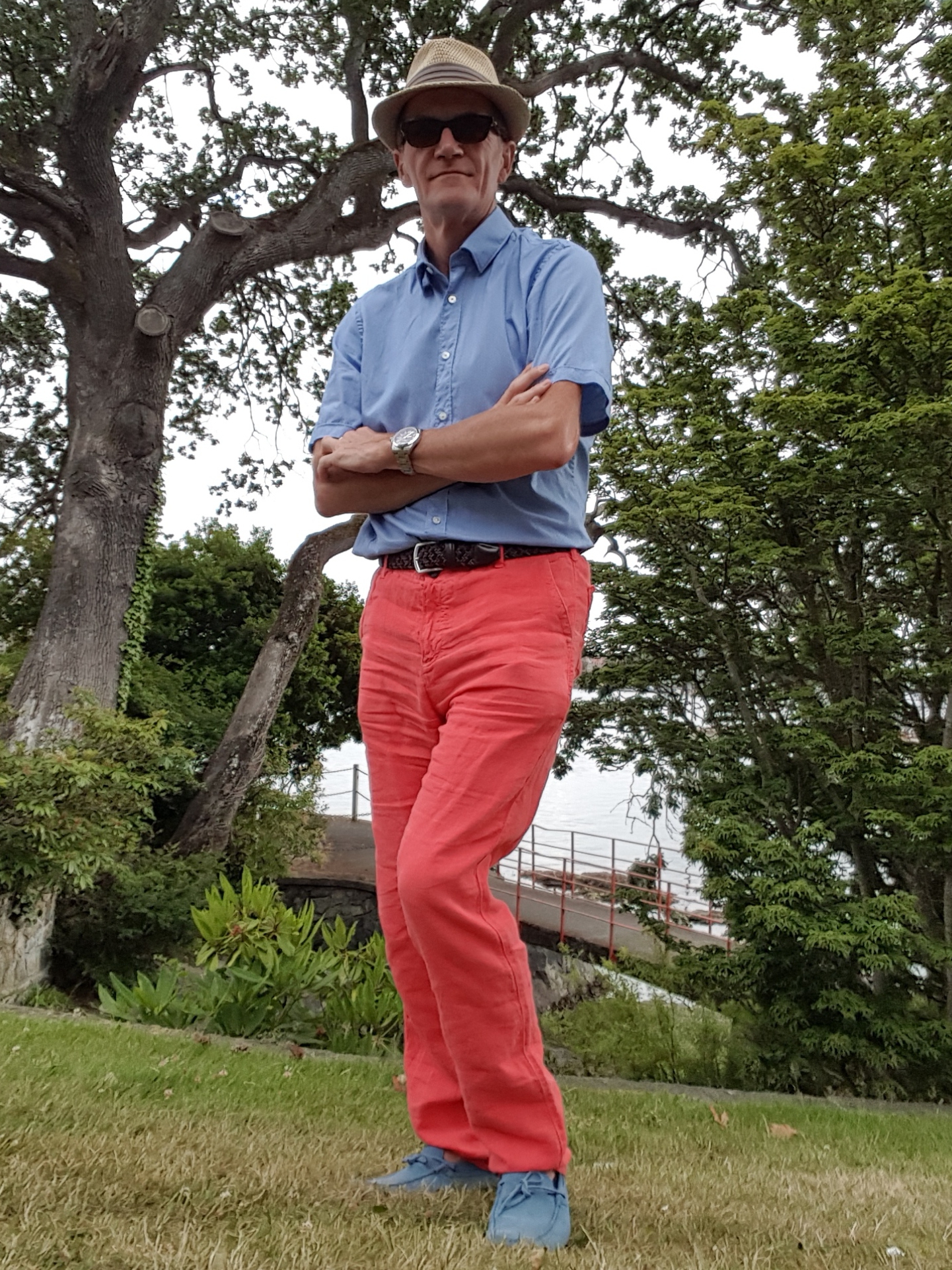
    20180719_141953

    Grocers and missionaries. That’s what flits across the mind’s screen when short-sleeve shirts are mentioned. One looks uncomfortable in the air-conditioned store, the other impossibly comfortable in the heat of the neighbourhood. And that’s why short-sleeve shirts have always been anathema.

    Now, Michael Douglas did wonders for two-tone collars in Wall Street and sparked a whole fashion trend. In marked contrast, the vastly underrated Falling Down had the reverse affect – the uniform he wears marks him as a beaten man and no one wants to voluntarily don that garb.

    In fairness, one man made the white short-sleeve look authoritative – Ed Harris as Gene Kranz in Apollo 13. Other than that, not so much. It became a costume that identified folks as drones, many even replete with pocket protector.

    Perception is changing this perspective, due to age and heat in equal parts.

    Here in Victoria there’s been something of a heat wave or as much of a heated stretch that can be inflicted when there is a constant sea breeze that flutters from flirtatious to ferocious. But it was warm. And the workplace is a 100-year-old rock pile that doesn’t accommodate modern convenience to keep everyone cool.

    So short-sleeves are welcome aid in getting respite from the sun’s tender touch, as direct contact is better than sweaty cotton. Those are the practical reasons.

    With age, it seems, comes a lack of fussiness. Rules that must be strictly adhered to can be slightly altered to circumstances. But one hard and fast rule: collared shirt at work, so no one confuses you for a tourist (to be fair, tourists often look like they are headed for a day at the beach and that is acceptable but only if you’re taking up residence beside water). With that non-negotiable, long sleeves do seem cruel and polos, while offering versatility, often lack any panache.

    Drone no more, however, as white short-sleeve shirts are no longer the sole choice open to those battling the temperature. Where dress shirts tend to express personality through colours (white, blue or daringly pink) and the occasional pinstripe (sometimes a pink one), today’s summer shirts offer colours and patterns that would be verboten with a suit and tie. And that’s what they are: summer shirts.

    If your residence is the Caribbean or similar climate, then disregard and consider them appropriate for the year long.

    For the rest of us, it’s a time to indulge. Colours that work because the skin pigment has some tone, a chance to wear a stripe horizontally or odd geometric shapes are all fair game. Up until just about Labour Day.

    The relaxation of rules, of course, only goes so far. Some tenets are unbreakable. Unless you are wearing a white short-sleeve shirt, then a necktie should not adorn the neck. It just looks weird and creepy. If a grocery store manager, missionary or NASA administrator, then white shirt and black tie is perfect. Also recognize which shirts work tucked in and which don’t. And Hawaiian shirts are awesome – when in Oahu. Cuban collars are great on holidays.

    There, feel better already. Enjoy the sun, soak up the rays and feel the wind blowing the heat on arms unsleeved. Bask in the warmth while being cool.

    Oh, one more summer rule, no matter how trendy it appears – socks and sandals, no.


  • ‘They Don’t Suck’ – a fan’s life

    _IMG_20180707_111457
    Highs of past, hope for new ones

    There was a time when this humble scribe trod the boards of local theatres. Not out of an abundance of talent, mind you; more because a male willing to do community theatre was a rarity and snatched up with nary a query. At the same time, the Prince George Cougars were moving into a new home and for that inaugural year yours truly was the rink announcer. This collision of passions made for interesting and, shall we say, spirited conversations.

    For the creative types, it was frustration in being hosted in an old facility that harboured a host of idiosyncrasies and severely hindered the scope of production, if you were lucky enough to use it. In contrast, the Cougars (recent arrivals from Victoria) were being showcased in a facility that cost $21 million to construct in 1994.

    One night, after rehearsal in a church sanctuary that was used for performances, the director – it was Crossing Delancey being staged – asked why such sums were expended on an athletic endeavor but not an artistic one. Simple answer: you can’t draw 6,000 people for 36 nights.

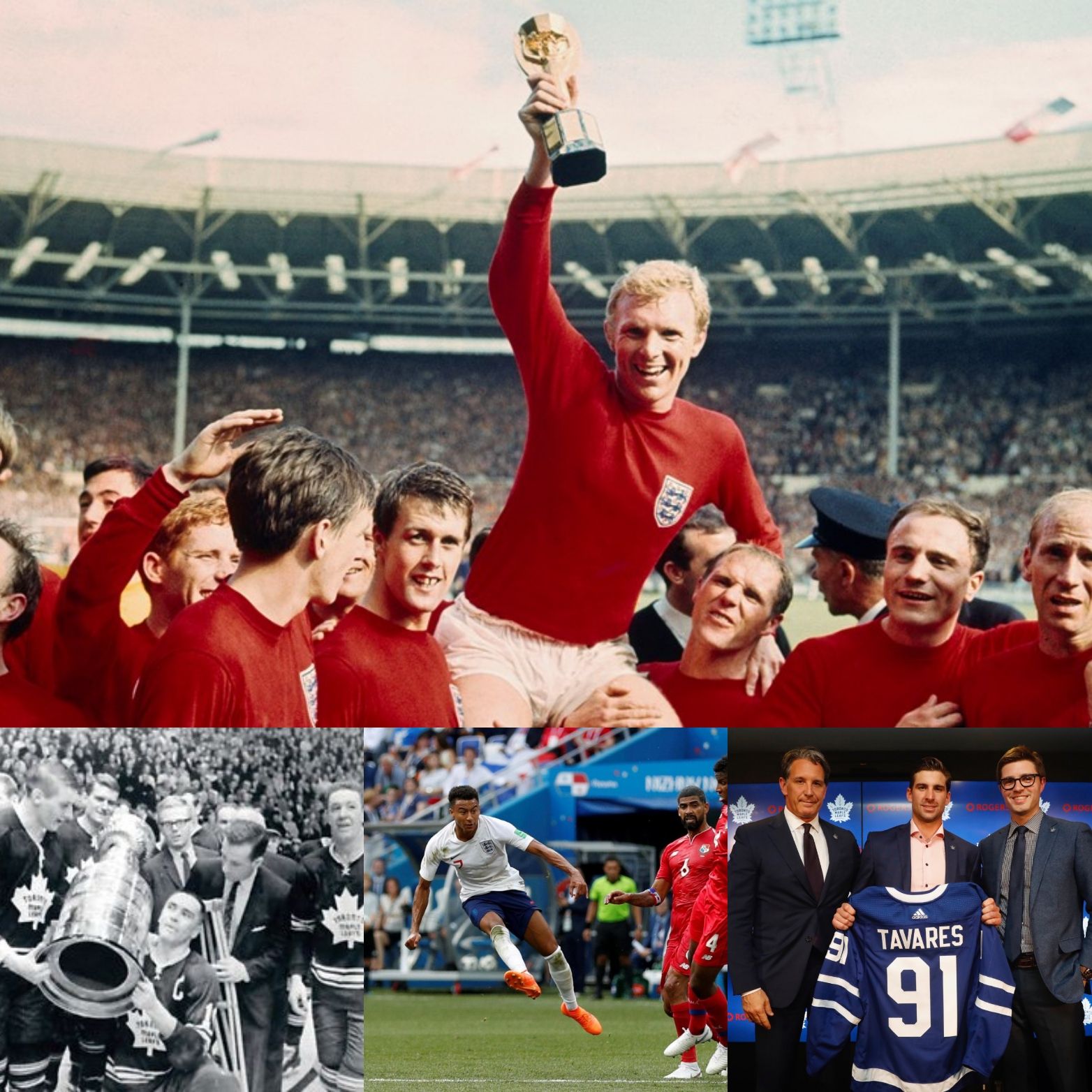
    This conversion of passion into structure has been at front of mind lately. There’s the World Cup, there’s Wimbledon and, of course, the signing of John Tavares to the Toronto Maple Leafs. It’s a reminder of the very good reason the word fan is derived from fanatic.

    Now lots of people are devotees of experiences other than sports: gamers, cosplay, knitters, ballet, stamps, fashion or the Society for Creative Anachronism. But none of those have the ability to unite in the way sports do. Every four years, we rekindle an interest in obscure winter sports. When the Canadian women won soccer bronze at the London Olympics it was shared coast-to-coast. And those old enough will remember the Blue Jays capturing back-to-back World Series titles.

    This edition of the World Cup has ably demonstrated the power of sport to unite. Walk into a pub and the shyest will join the celebration, fist pumping and obscure facts pouring out to fill any gaps. As an England devotee, moments of pure terror have mingled with sheer bliss. Against Colombia, the tension as the lineup began for penalties was excruciating but best shared.

    It was the same with the signing of Tavares. A legitimate superstar who is still in his prime doesn’t ink a contract in Toronto – it simply doesn’t happen. So when it does, there is a tendency to want to start charting a parade route.

    Some teams manage to be ‘lovable losers’ – such as the Chicago Cubs for all those years and, to be honest, the Saskatchewan Roughriders – and some are just losers. That category would host the Maple Leafs and England, rich teams that live, seemingly, on past glories. And the timelines are eerily similar.

    The Leafs last drank out of Lord Stanley’s mug on May 2, 1967 and Bobby Moore hoisted the Jules Rimet Trophy on July 30, 1966. For both of these occurrences, your correspondent was alive. When England won my first breath had comes seven months before; the last Leaf win came at the ripe old age of 17 months.

    Since then, mostly suffering. Glimmers for sure. Leafs of Sittler and MacDonald, of Gilmour and Clark (damn you, Kerry Fraser) whetted the appetite; the Three Lions were even more tempting – as the teams of Gascoigne and Lineker gave way to the Golden Generation. But heartbreak always.

    From a boy growing up and watching the Leafs in black & white to a year living in England when the memories of winning were fresh to a familiar pattern: they look pretty good, think they might do alright, they suck, and what did you expect.

    Butt of jokes. Squads cringe-worthy in badness. It builds character for the true fan. And the suffering is part of the payoff.

    Take American football: if you’re a recent fan of the Patriots or the Packers, I feel bad for you. There are dark times to come and be prepared. As a Steelers fan, yes there are the six Super Bowls; there is also Bubby Brister, Kordell Stewart and Tommy Maddux to name a few who came between Bradshaw and Ben.

    That’s why this World Cup – and waiting till after the quarters and publishing before the semis was deliberate – is so much fun. There was talent there, obviously, for England; there was a likeability and toughness due to the way many of the players fought into the top echelon; and then a path opened up – partially by the players and, yes, by the football gods who decided Germany, Brazil, Spain, Portugal and Argentina should go home early (not to mention Italy and Holland not qualifying).

    So Wednesday will be a moment to bask – this time they didn’t suck. And that’s a win. Then there’s 82 games with Tavares in the blue and white of Leafs Nation. Another win.


  • Running with (right) attitude

    IMG-20171208-WA0004
    Getting some mo-mentum last fall.

    While preparing to write on my intransigence to run clubs, I reached out to Capital City Run Crew – a local group that seems to have a lot of fun. Deadlines didn’t match-up, but Carlos did respond to questions with intriguing answers. So an update is presented.

    Now, most run groups/clinics are fronted by retail operations – here in Victoria that would be Running Room, Frontrunners, MEC and the evil empire (LuLuLemon). Nothing wrong with that. Makes a lot of sense: they know what they’re doing and have the opportunity to build some brand loyalty when the times comes to purchase new shoes, water belts, clothes or gels.

    But the Capital City Run Crew is different as they are in it only to spread the gospel. And Carlos and crew have a refreshing attitude. When asked if newbies are intimidated, the answer was ‘Duh’ (that’s a paraphrase). And it is. No point sugarcoating it and pretending all is happiness and light. The Crew operates on the Marine principle: no runner left behind.

    Back 75 pounds ago, I can recall going out with a friend who wanted to encourage running. It was painful. They were practically moving backwards to keep up and that was frustrating for me. No one wants to be the person who is holding someone back.

    A true run club is about the process. No one is expecting to win the race and be corralled with the elite; this is not a track club of athletes, it’s a gathering of those who want to share the benefits that accrue from getting off the couch. Call them runvangelists.

    Below is Carlos answers to my questions. Give it a read and then dig out the old shoes and hit the streets – at your own pace, knowing no one is left behind.

    Why did you start the club?

    We started the club because I had recently moved to the Island from the mainland to move in together with my girlfriend of two years. We had been going back and forth every few weeks for two years so we figured it was time to make the big move.  During the two years of spending time in Victoria, I joined a few clubs around the city and I just didn’t feel at “home” with any of them.

    That’s when we decided to go for it and start our own group.  My girlfriend (Sarah) and I, thought about what it would take to start our own run club and have people come out and join us. We came up with a simple plan. Show up each week, call ourselves a run crew and post on our social media as much as possible. We ran the first few months alone, but eventually, word got out and we met some great people who have helped us build the club to where we are now.

    Biggest benefit?

    To find a group of people who were interested in doing the same fitness-related activities as us. Besides running we also organize; cycling, yoga and softball events

    Will newbies be intimidated?

    Newbies are always intimidated at first. We get a lot of messages on IG and FB asking us about our pace and our group. We always answer these questions with “we run together and no one is left behind.” Once the new runners join us they become hooked to the group because we are always having so much fun!


  • What happens at run club

    orig-VMAS0652
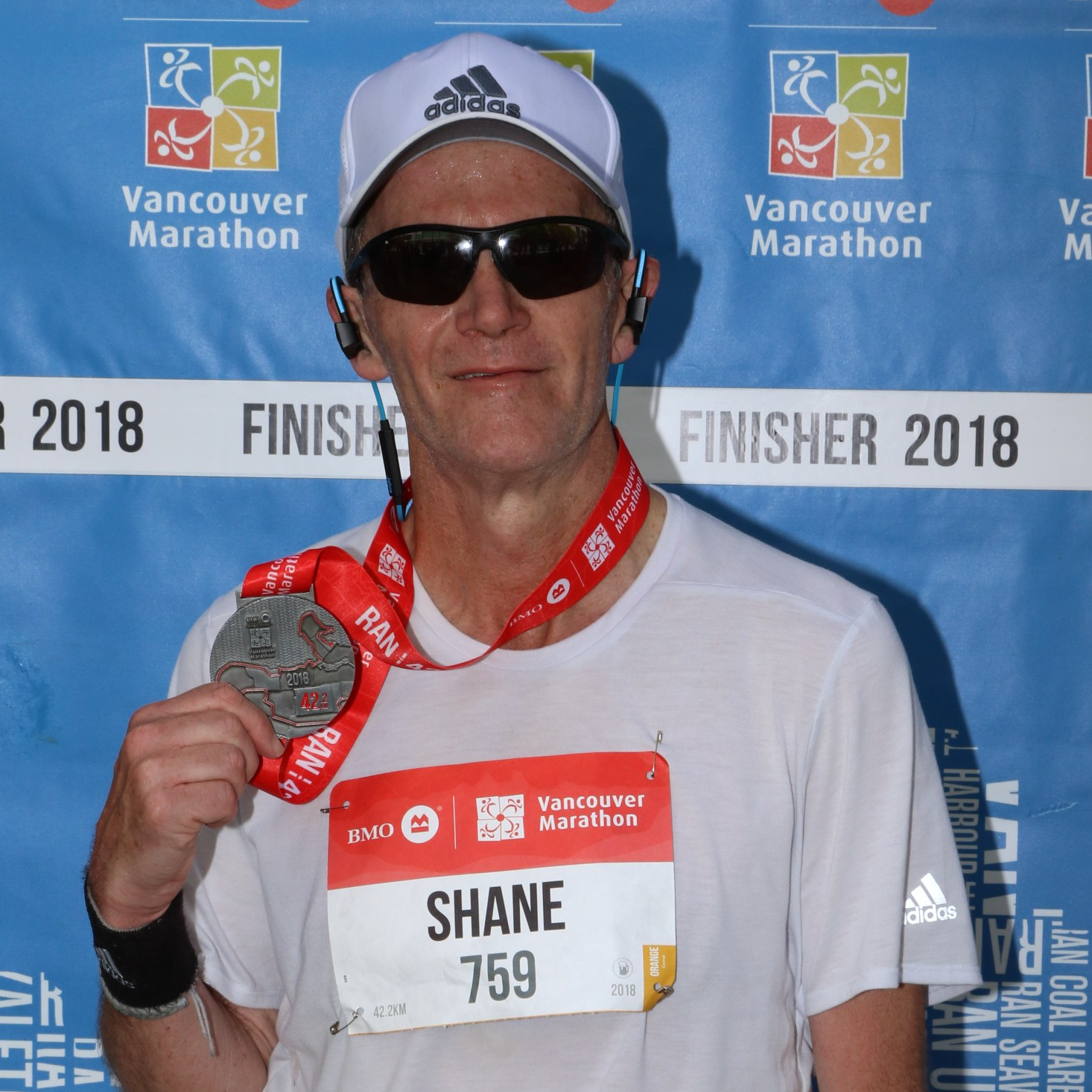
    Lone poser at BMO Vancouver Marathon

    Grade 8 was the start. Running as freedom, a literal escape. Special permission was given to leave the grounds at lunch, free to traverse a prescribed route and roam without the watchful eye of a teacher. Solitude but not sedentary; space to exercise and be alone simultaneously. Awesome, as that skinny kid would have said.

    Even when the pounds piled on and walking to the pub (or bookstore) passed for a workout, those moments of privacy were sought out. For the extroverted in the crowd it may come as a surprise, but solitary doesn’t always equate to loneliness; sometimes it is just a moment to recharge and regroup, before diving right back in.

    To this day, when time permits and a project is looming a few stolen moments for a walk around the block work wonders: the mind focuses, all the input is digested without more pouring in and then it can be processed and presented in usable form.

    Since reacquainting with running and shedding five stone, those moments when the only sounds are feet pounding the pavement and your breath over the beat of the music are even more invigorating. It’s the most descriptive way to explain it. And the distance, whether short or long, doesn’t matter – it’s just that sense of being cocooned from all the noise that you’re travelling past at pace.

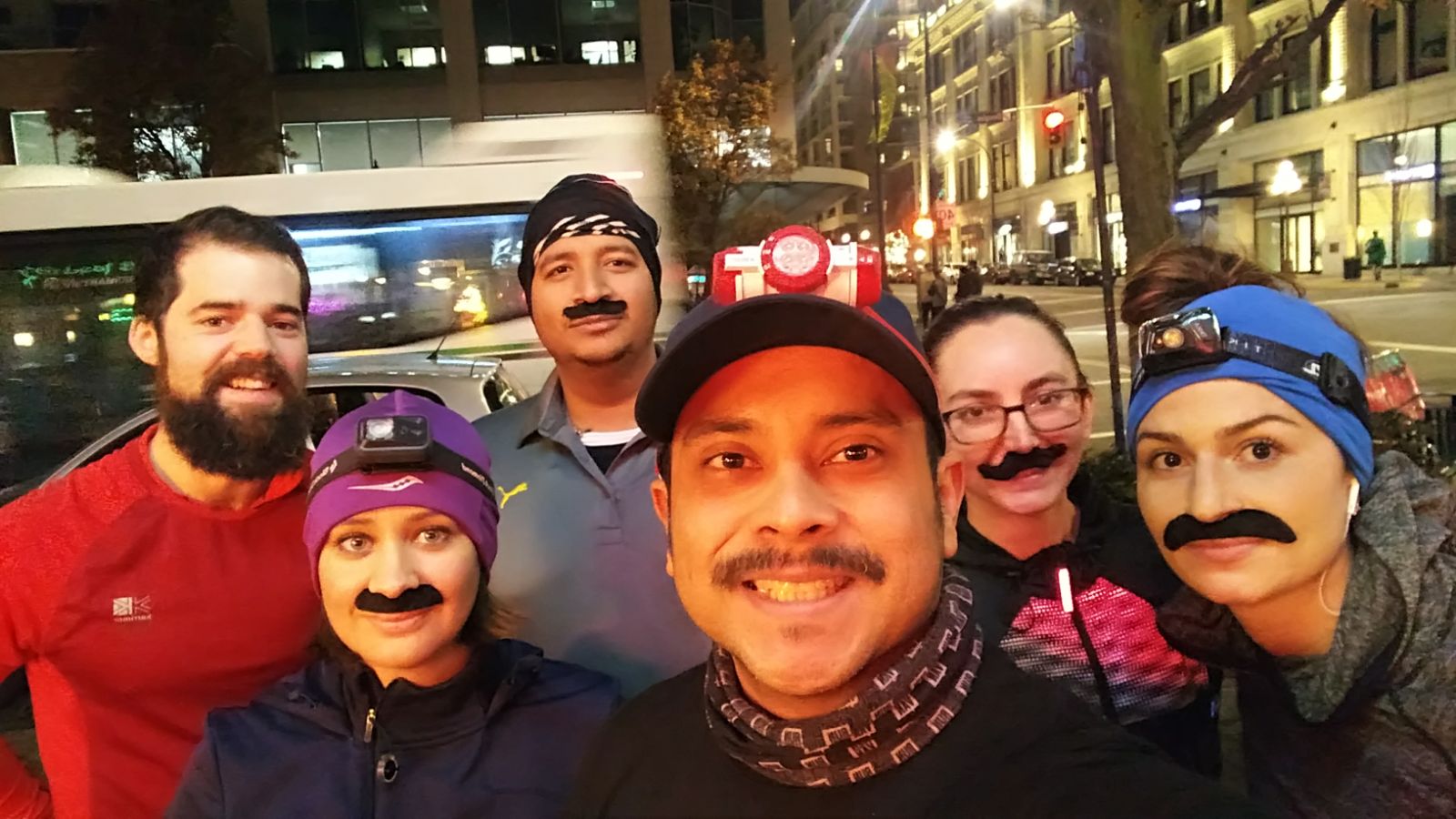
    So, why then a tinge of envy for those in running groups/clinics? Simple really: It’s the after-pictures, whether from racing or training. They look like they are having fun, dammit.

    Recently, Capital City Run Crew in Victoria has been popping up in feeds as they prepared for the Scotiabank Half Marathon, with a mix of track, temp and long runs. The is not envy for the workouts; it was the pics of eating at places like Beacon Drive-In or Taco Tuesday that appealed so viciously. Run, eat and talk. Sounds perfect.

    This isn’t the first time jealously has reared. Mike Klassen is an old friend (take that in the various ways it could be, all work) and posts photos of his regular run club. So I asked him a few questions about why the social support works for him.

    Why did you join?

    It was time for me to start running again. I had run regularly with a ‘running buddy’ when I was younger, then I found knee pain to be a barrier. I began very slowly, with short distances usually less than 4-5K. I had a companion who had foot pain, so we ran 2 blocks, walked one block until we finished the route. Eventually I stopped the walking, and gradually worked up my distances.

    But in the end, the attraction of the running group was the companionship. We joke that it is actually a coffee meeting with a run thrown in, but it would never be the same without the distance run.

     What’s the biggest benefit?

     I like the better moods and personal confidence building that results from running, even a little bit. When I’m running I notice that other runners often have smiles on their faces. A few of us say that you cannot be grumpy as a runner, and I think for the most part that’s true.

    It’s fitting that thoughts of run club have reoccurred at the time of the Scotia Half. Last year, my friend Catherine – who was living in Vancouver – said she’d pick me up from the hotel as she was also running that day. And then we picked up a couple more folks, all members of her running group. Then we did some car manoeuvres so everyone got to the University of BC smoothly and no one would be left without transportation at race’s end when crossing the finish line at Stanley Park (to be fair, the Canada Run Series people have efficient shuttle service back to UBC, if you want to wait).

    But it was after the race that made the most lasting impact. Those met on the car journey were joined by others at a local pub in False Creek for a well-earned brunch and drink. There were the time comparisons, the joshing about missed training sessions, the full-throated congratulations to those who achieved/came close to their target times and an all-around affection for those who shared a solitary moment as part of a large group.

    It was the camaraderie that Mike Klassen spoke about that made it seem like such a tempting idea. But not going to lie, back at the beginning of this journey there was no way I would have joined a run club or clinic for one simple reason: embarrassment. Dragging my ass and sweating no matter the temperature, all because I’d let myself get so out of shape, it felt like penance, deserved punishment. Needed the self-flagellation to be in private.

    And it’s not like friendly events are now avoided. Participated in the Resolution Run, the shakeout run before Goodlife Victoria Marathon and this year’s Solstice Run (which came with beer ticket) – those are fun and friendly, even if latter doesn’t apply to yours truly.

    The struggle is surrendering the solitude. There’s almost an obligation to chat and that is the one time small-talk shouldn’t be mandatory. Part of the rush of running is the different refractions the brain waves can take. Detour here, straight line there, double-back now: the route is planned, while the mind is free to wander. Hell, even in the minutes before a race I’m the person standing in a trance, no bopping or smiling, just transporting into my space.

    So the habit born 35 years ago is not going to be broken: running will remain my time, even when surrounded by four, 4,000 or 30,000 others all doing the same thing. But is it wrong to only pop into run club for the food? Or even photobomb them? Asking for a friend.

  • Oh, Canada

    20180701_073527
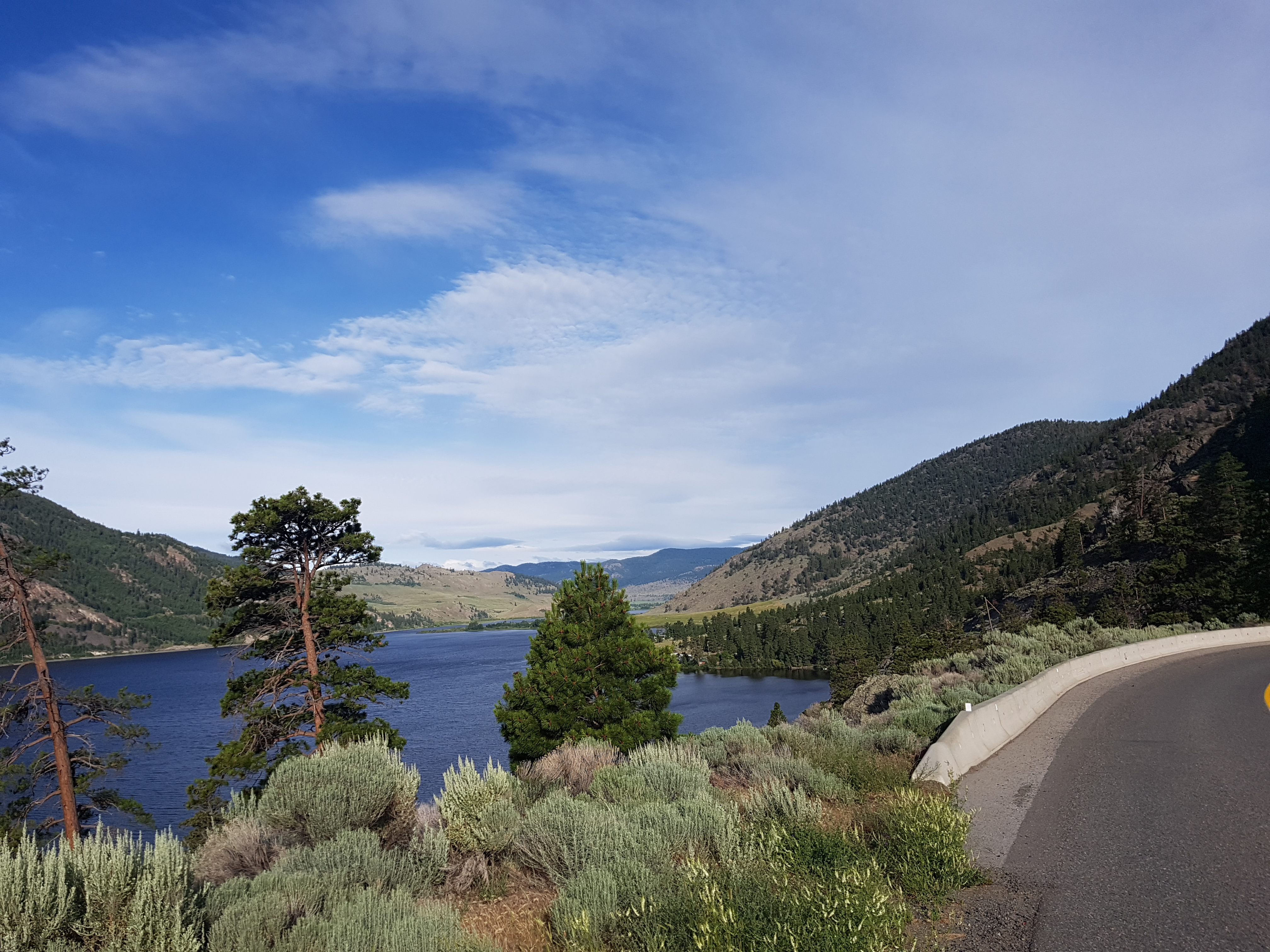
    Canada Day in the Nicola Valley – also a perfect place to get some hill training in ahead of San Francisco Marathon.
  • Smart separation

    Going through a break-up. Not a ‘never interact again’ type. More of a ‘need space’ and ‘will see occasionally’ sort. It’s not easy.

    But it is for the best. And it’s my fault. I was the needy one. Always checking in, obsessed in a way, never allowing time to separate us. So enforced separation from the smart watch was needed.

    It all started brightly.

    The new Samsung Gear S7 – a tool to aid in the evolution of running, a way to track exertion, distance and time. It was a piece of equipment. Shiny and new, full of neat features to be sure – even when not serving as a running aid. There was the many faces available, very cool. Music on the wrist, handy. Weather at a glance. Step count with no need to track to an app first, it is right there with a twist of the bezel. Plus, there are options to track heart rate, check all your email and myriad of others never used. Without doubt, some tween more advanced than I, could start a war with the damn thing.

    However, the most insidious feature is the ordinariness of it all. It slowly creeps up and takes over. There is no barging in, it is slow and methodical in the way the technology takes over and becomes, it feels, necessary to be always present.

    Even in yoga, where it shouldn’t really intrude. Now, yoga is much more about the physical than the mental for me (no, omms in my practice) but I do appreciate the opportunity to tune out the world. My preference is to find that mindfulness before the class begins – so arrive early, do some legs up the wall, series of light stretches and then relax.

    Now, the clock intruded innocently – how many steps, if any, are logged during a slow-flow class. A simple question. But with the timepiece already in the space, what would be the harm in using the stopwatch function to time the legs up the wall. And that led to glances to see how much longer class would extend and that meant the solitude sought was truly shattered.

    It really was the damn step counter that led to the ruination of the experience. Fixated would not be too strong a word. Continuous checking of the total for the day, tapping to see how it compares to the weekly average. Up or down, need to know right now and the enjoyment of the stroll be damned. Turns out, no, I don’t need to know a real-time step count.

    Here’s the oddest part: the smart watch was bought as a training aid for running and that is the spell I’m least possessed with.

    Start the run, it tracks time and route for duration. At end, it uploads to Map My Run so progress is recorded and available for review. Shows splits and pace. All of which is studied later.

    During the actual workout, the odd glance down to see time or distance but there’s no fidgeting to alter which info is being shown – no being gripped with need to know pace per km or what my heart rate is during the climb of a hill. It mostly just tells time.

    So far, the trial separation seems to be working as it makes the time together more satisfying. It hasn’t been easy. Head out the door for a stroll and the fingers still glide towards the bezel to check out the step count, except this watch is not for counting. At yoga, there was the renewed experience of just appreciating the practice and not fretting about time. And on runs, it is there and doing the job it was intended for.

    From now on, except when required, the watch will look smart but not be smart. Oh, with one other exception – on the golf course, as there’s this great app that measures distance from ball to green. Not all tech is dumb.

  • Case of Proven vs Shiny (Democracy edition)

    Forgiveness, please, as today’s post is political. But after 40 odd-years involvement, it seems time for a tribute to parliamentary democracy as it is.

    To paraphrase Churchill: our system is not perfect, but it is better than the alternatives. It is a form of governance that has served us well, protected from demagogues and largely prevented extremism. Perfect, no. Anomalies, yes.

    Consider the contrast of Canadian national leaders over the past half-century to the United States and this country has largely come out ahead. And it is the system that has helped to forge those checks and balances, a system that derives power by directly electing representatives. The prime minister or the premier is able to function by having support of MPs or MLAs – lose that, lose power. See Bill Vander Zalm, Margaret Thatcher and Joe Clark for examples.

    Here in British Columbia, the current premier did not win the most seats or votes. Instead, he has support from the majority of those who possess a seat in the legislature. It’s the system.

    Growing up in Ontario, minority governments were not the rarity they are on the west coast. Bill Davis, the pipe smoking Progressive Conservative from Brampton, served nearly half of his 14 years as premier leading a minority government. Arguably, David Peterson’s best years at the helm of a Liberal government were the first two conducted as a minority. Federally, Lester Pearson, Pierre Trudeau, Paul Martin and Stephen Harper all led with minorities.

    So it works. But a hunger to find something different – which is natural – persists – even in the face of proof that new is not necessarily better.

    British Columbia has, twice, had referendums on whether to change from a stable system to a newer, albeit, shinier one. We are about to face a third.

    There are several reasons the current system, ultimately, is preferable to the proposed multiple-choice options being offered. Opposition to change, from my perspective, is long-standing. This isn’t about the current alignment in the Legislature; it’s about unnecessarily embracing something that is more flawed.

    After 30 years as a reporter/editor and now staffer, it can be said with certainty: elected representatives take the job seriously, work damn hard on behalf of everyone who walks through the constituency office doors and no one is checking party memberships. Part of this is intrinsically in the make-up of those who run – they want to help, no matter their partisan allegiance. But there’s a second part: they are elected directly and are accountable to that same group. Answerable every election cycle, but also every day at the café, the ballpark, walking down the street or at their child’s school.

    What is being proposed will take that away, in a fashion that looks trendy but ultimately will not serve anyone well (kinda like when overalls were cool).

    Larger ridings will make the connection even more tenuous than it already is. The link between elected and those who elect needs to be strengthened, not weakened. There are some British Columbia ridings that currently take days to traverse; making them bigger will only aggravate the situation.

    However, the most insidious justification given is the idea of taking power away from parties and handing it back to the people by selecting your representative from a list curated by political parties. Think about that. Bigger ridings and at least one MLA that has no knowledge of your community and no allegiance to anyone but the patrons who appointed them. A resident of Nelson, Prince George or Port Hardy represented by someone picked from a list created in Burnaby or Victoria.

    And on the theme of every vote counts – not under any of the myriad of options being proposed in British Columbia. The Attorney General has proposed a threshold must be met, which means only the three parties currently represented in the legislature would qualify.

    There is also the odd proposition of a party being unable to elect a single person to represent a community but still having a significant numbers of MLAs (selected from the party-approved list). Look to New Zealand, the current prime minister was put into office with the support of an anti-immigration party whose entire parliamentary caucus is appointed.

    Peddled, too often, is the fiction that MLAs are complete puppets of premiers and bereft of any influence. From experience and reading history, it is possible to attest this is not true. Yes, MLAs support agendas they run on and accept there will be compromise; but a caucus that is lost means the boss is toast. British Columbia is not as brutal as Australia in exercising it, but it’s definitely a factor in leaders taking own version of walk in the snow.

    And MLAs can do that because the ones who ultimately decide their fate are voters. They are not beholden to the party apparatchiks who have selected them. Parties and the non-elected leadership will strengthen their hold on power, not reduce it.

    Equally disturbing, though, is the process for changing the system. No threshold on turnout, no elevated majority for passage (most stratas require two-thirds majority, as does the BC NDP constitution) and a promise to reveal all the details later.

    It is like someone has determined you might be cranky at work and promises a new opportunity. What is it? just take the job and all the details will be revealed later. That is absurd. When Gordon Campbell proposed changes it was done by Citizen Assembly, the politicians removed from the equation. The electorate was trusted to know the details before voting for an aspiration.

    Having worked for three members of executive council in two provinces, a respect for the imperfect system has developed. Once, a deputy minister explained why staff wouldn’t call a minister by first name: ‘It’s about the position, it’s about who holds the office, it’s not about you.’

    That has always stuck. John Horgan, when bumped into in the halls, is greeted with ‘Hello, Premier.’ His cabinet ministers afforded the same respect. It’s about what the positions represent. Changing the system deserves the same respect.

    And the current system – which allows for stable, representative, elected governments – is worthy of respect and support, even if it’s not shiny and new. Why? It works.