Category: Uncategorized

  • Four reasonS for running

    IMG_20180819_114149

    When it is discovered that I like to run, there are always two questions. But they are, for me, the wrong ones. The real question is: why would I stop?

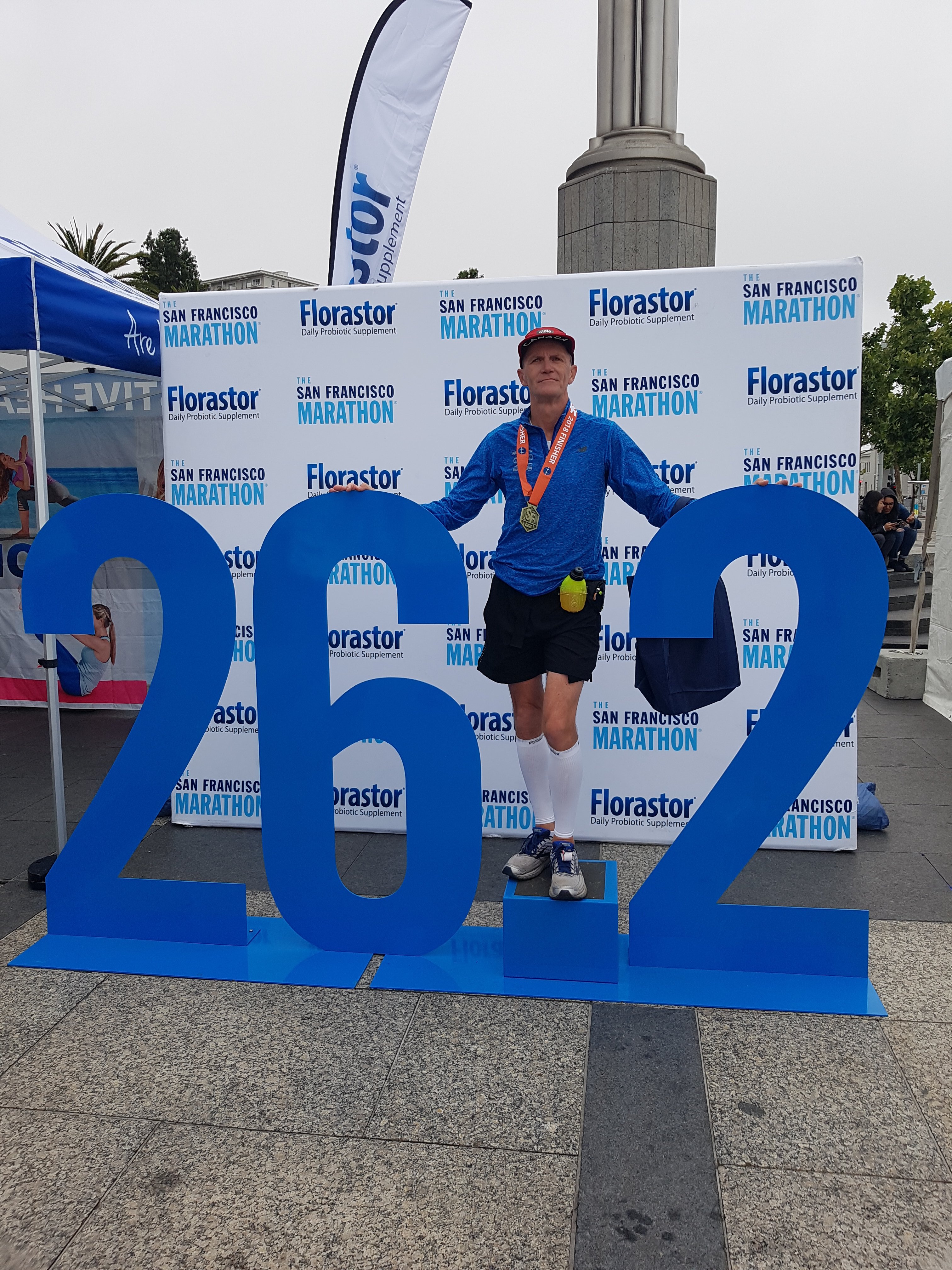
    Most recently, it was while enjoying a rich dinner in a San Francisco eatery. This place is a place that travellers drop into and locals use to commemorate milestones – for us it was both. First trip to the City by the Bay and the marathon (first outside of Canada) completed. The couple seated to the right were celebrating her birthday.

    Conversation began with usual information exchange: where are you from, why are you here, what do you do. The fellow was an ex-Marine, with ink bleeding out from the tight line of the short-sleeved shirt established around his bicep. He was fit, without doubt. Those arms the size of my thighs, maybe bigger. But to him, the 26.2 distance was something mythical, he wasn’t fit enough to manage it. Except, there’s different types of fit. Told the fellow that, as an example, pretty sure I could only manage one chin-up, while he could do a host of them – even with me hanging off his back.

    His partner asked the ‘what do you think of for such a long-time’ question. Which is a fair question. Music helps. So does just taking in the scenery, seeing new things or old sights in a different light. But the alone time is just that – it’s your time. For someone who is a bit of an introvert and doesn’t mind the silence, a long run can be fruitful. Questions asked and answered; some real, some fantasy (yeah, Leafs can win Stanley Cup this year – which category is that?)

    The answers to the common questions, even as the word come out, don’t sound that convincing. Trite, almost. As if read in a running magazine. It’s difficult to explain the why and then it dawns: forget the ‘why do it’ and focus on ‘the why stop.’

    There are four reasonS reasons to not continue the journey that running leads me on.

    Slim: Fairly obvious one. Shedding pounds was the major factor in leaving the couch and trying to get around the block. And it has worked. Down probably 75 pounds. Feel healthier, possess more energy and clothes fit. It wasn’t all the exercise, as it had to be done in conjunction with diet. MyFitnessPal was an invaluable tool in tracking diet (throwing up a few shockers as to what is healthy and what isn’t), as was SkinnyTaste cookbook that showed food doesn’t have to have taste and texture of drywall to be healthy.

    Sober: It’s called a beer belly for a reason. Pregnant women used to compare own progress against static size of mine – won all early rounds, I did, and even beat a few who are just about ready to birth. To say a drink was appreciated was an understatement – a side-effect of two careers that have drinking culture while remaining largely sedentary (journalism and politics). Running has meant discipline. No need for one or two every night, at pub or at home. Have to get some mileage in or go to yoga. A friend saw the screenshot on my phone – ‘a picture of yourself, really?’ Yep. It’s a shot of latest race as reminder of the steps taken and not wanting to go backwards, especially when perched on a barstool.

    Sane: Maybe it is a result of being an only-child but solitary time is not frightening. In fact, it is welcome – a respite from the craziness and quickness of the world. Always being bombarded with information and stimuli, a run offers a break. Doesn’t matter if it’s just 30 minutes or three hours, that time on the pavement is yours. And the data being absorbed is restricted: some tunes and what your mind generates (guilty, I am, of flooding my own mind with material when not running as the Samsung is always pointed at face, with fingers redirecting from website to website as tangents pop up).

    Non-Smoker (mostly): Okay, hesitated here. For years, was a Shane-smoker – which is lighting one up off the end of the other. Then quit. Then Vegas and recaught the bug a bit. So went from a cig snuck on a night out to full bum mode to ‘owe you a pack, so let me give you this one’ mode. The worst part is I didn’t really feel it in the lungs. But the legs is where it made its presence known. Poison seeping through. As an old man running, only have a few years to make improvements and no need to self-sabotage. So, yes, refocusing on being non-smoker.

    There was one question that was more unspoken in early years – you’re a runner?

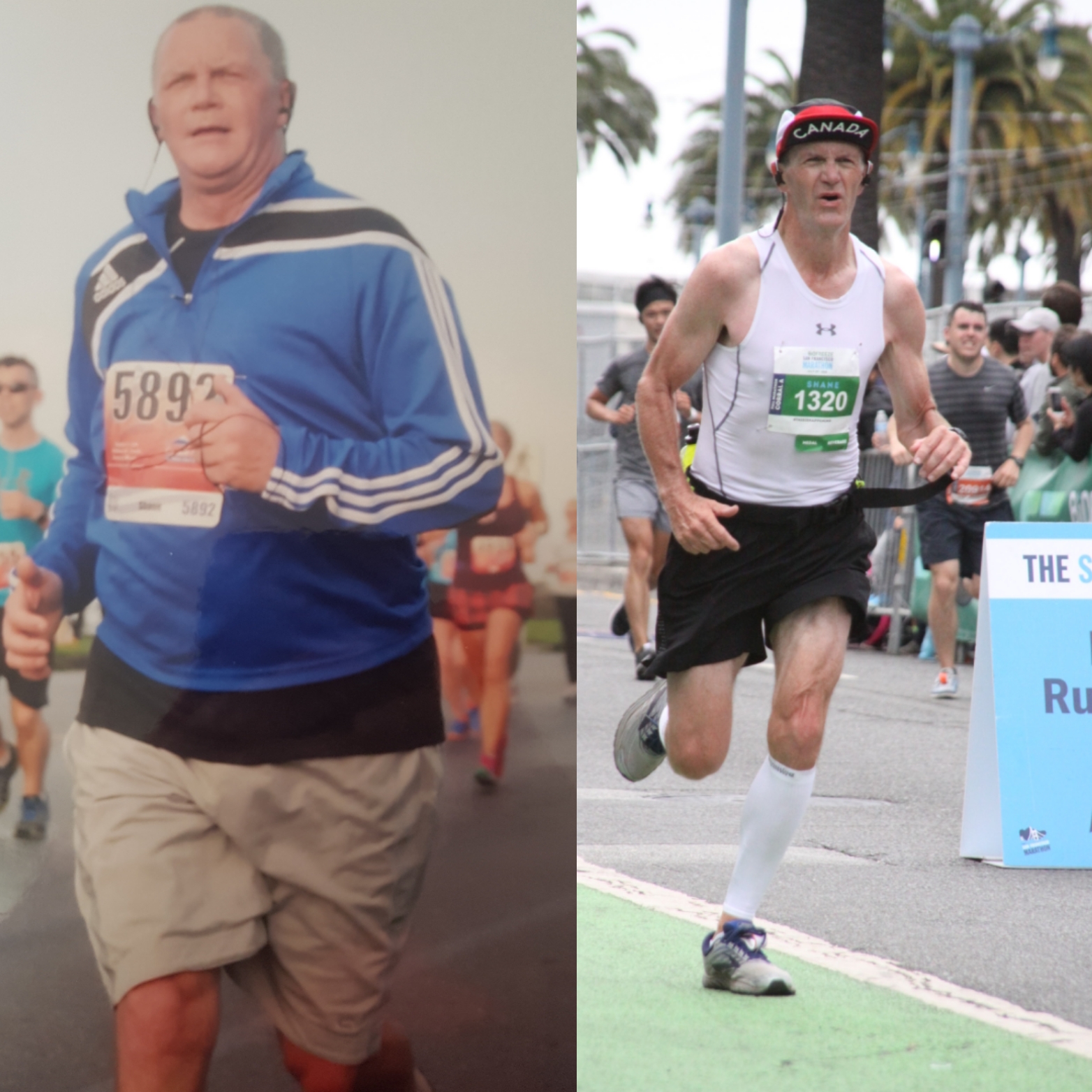
    People were too kind to explicitly phrase it that way, but the eyes don’t lie. This fellow with chipmunk cheeks and hosting an industrial-sized tire around the waist is a runner? Does he carry his health card with him?

    The worst part is they were kinda right. In my mind, I knew I was a runner; but the body had forgotten what it once could do. Pride wanted to skip the run/walk part of getting back into shape; reality had different ideas on how long it would take. Some of the early jaunts around the neighbourhood were harder than anything done now. They set the foundation and now can build on it.

    So the why I run is simple and so is why there’s no stopping.
  • Searching San Fran’s secrets (by foot and mouth)

    Spooky. That’s the image that is now ingrained of San Francisco after a three-hour tour. And, to be fair, not entirely spooky – also sinister. San Fran is a city that has its secrets shrouded.

    Having never been to the City by the Bay – an image was built through books, movies, television and Hearst history – the city’s rep was odd combo quirky and techy, liberal and elite.

    What would Sam Spade think of Lyft? Probably a thumbs up. Full House is likely thumbs down. And Bullitt – he’d want to drive the Mustang but would understand why Steve McQueen deserves respect.

    When the decision to travel south for first destination marathon was made, San Francisco was easy choice; but six months ago picking the distance was difficult with options of the full or two separate halfs that largely replicate the full route.

    At this point, was still hoping for Boston qualifying time at BMO Marathon in Vancouver, which alas did not come to pass. However, it wasn’t worries about times that led to the full marathon, it was much simpler: why go all that way and not see the whole damn city. Run over one of the most iconic bridges in the world and traverse world famous neighborhoods like Haight Ashbury. Only made sense.

    The plan was always for this adventure to be equally about travel and running: dubbed it travrunning.

    Key component of planning was the race. What secrets would the early morning give away that are overshadowed by the vibrancy that ensues as the population comes to life. Very few, it seems.

    Starting the race along the waterfront is cool, with mist mingling with fog before sweat even breaks. The Bay Bridge can be seen, fairly crisply.

    As the route winds through Fort Mason, after first incline, there’s a downhill and a glance to the left reveals a residential enclave. A chance to see if anyone in San Fran is up this early. Thwarted, though, by the fog- the ground floor seems to separate from the stories above. No lights are seen through the curtain.

    From there on to the Golden Gate Bridge, with a couple of hills acting as welcoming party. Approaching the bridge, nothing suggests it is an icon- it would appear to be a flat Soviet-era design. Once the deck was accepting the pounding of thousands of pairs of feet, a little of the majesty is sighted. What isn’t? Alcatraz. I know it’s there but from the vantage point of the bridge, The Rock has disappeared.

    The rest of the race follows a familiar pattern: the immediate is stunning, the promise of more only hinted at.

    Another thought: Vancouver is sited in a spectacular setting. Stanley Park, the bridges (particularly Lions Gate) and the mountains create a visual allure few can match. Drawback: Van doesn’t have the history and heritage buildings that would incite people to climb massive hills of concrete.

    And while it seems the race has taken precedence over travel, not really true. Culinary treats have taken center stage. John’s Grill has best chops ever, plus the legend of The Maltese Falcon. Market Bar on waterfront, toned down tourist trap. Kokkari was the best Greek food, playing into no stereotypes. Anzu served up a brunch earned after 26.2 miles (we weren’t only competitors dining). And Gary Danko is on agenda. Plus with two more days there are some brewpubs and small eateries. Along with Jays game in Oakland.

    Verdict is clear: travrunning will continue. Maybe even Boston, now that the qualifying time is secured.

  • Being a travrunner is tough

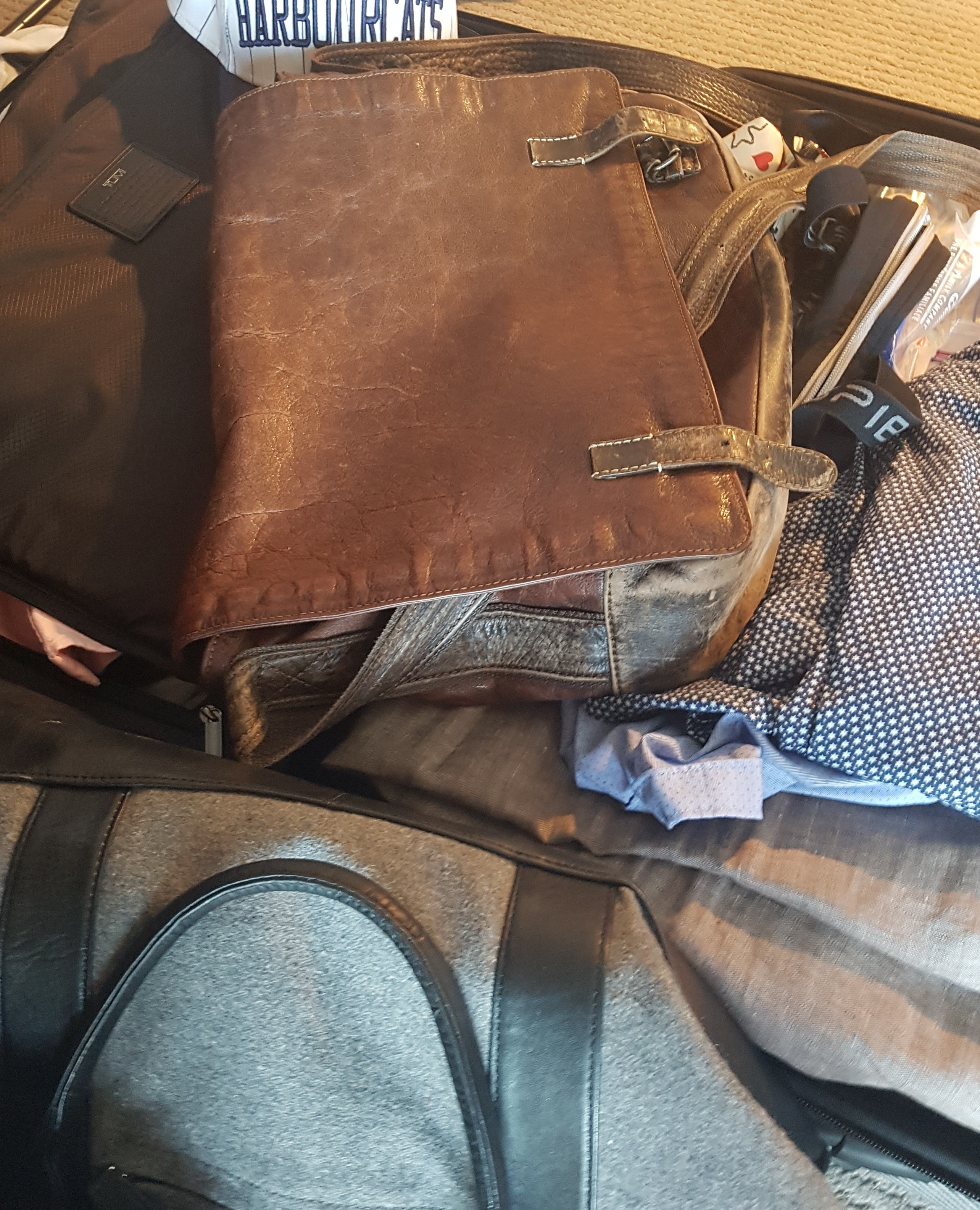
    20180726_185721.jpg

    Vacationed in another country? Check. Travelled out-of-town for a race? Check. Then why is the mind racing with abandon as a combination of the two is nigh? It’s much more taxing, lists are made and items crossed off, then double-checked; damn, going to need a break to recover.

    This is where we are at, dear travellers and runners. Tomorrow a flight to San Francisco will be caught, Sunday a marathon will be attempted, Monday a Jays game captured and Tuesday evening back to Victoria.

    Normally, packing for vacation is easy. Pair of shorts, one pair of linen pants, swimwear, some t-shirts, one dressier shirt for dinners and rain jacket. Oh, a hat as well. Plus couple pairs of shoes – espadrilles, sandals and running shoes. That’s the standard for the annual trip somewhere hot, damn hot.

    And all of the races outside of Victoria have been in Vancouver – so a journey by ferry or seaplane, requiring only one night away from home. But even then there’s a backup for everything: socks, KT tape, Voltaren, hats, shirts, ginch and shorts. Call it a superstition, but I like to be prepared. However, the closeness of home and familiarity with Vancouver shears it so no real peril exists.

    Combining the two, though, is proving exhausting.

    There’s only so much suitcase space and conflicting needs. And the fault clearly lies with San Francisco.

    Putting the race aside, for a moment, the city is a smorgasbord of attractions. As a lover of crime noir and Bogie, dining at John’s Grill is a necessity – so can’t show up in flip flops. Then there’s the fine dining aspect, where Gary Danko is on the agenda and that requires more than dress shorts. Staying downtown, walking the neighbourhoods and hitting restaurants like Kokkari Estiatorio and Anzu before scoping out funky bookstores & boutiques, then some comfortable shoes and shorts are required. Then there’s just the weather: sun or rain, warm or cool – stay awhile and it could be all of the aforementioned according to people who should know. So need jackets and umbrella.

    Then there is the race itself. In the definitely must pack category: singlet, sleeved-shirt, warm-up jacket that can double as rain protector if needed; shorts, back-up shorts, compression shorts, two pairs of socks (one thicker than other); and the ‘bag’ – which contains all the accoutrements needed to prepare – oatmeal (taking my own), granola bar (again, taking one my system is acquainted with), tape for knees, some Vitamin I, bandages, gels and Nuun for water bottle.

    See the challenge? Air Canada allows one-checked bag and one carry-on bag. Still not accounted for in what must be lugged aboard: running shoes, utility belt and caps. Plus, want to take my man-bag with me. And need a few books for the flights.

    But then, like a dream, an email from Aeroplan, that answers the question I didn’t know I was really asking.

    Let’s make sure you’ve got all the information you need to take off to San Francisco, stress‑free.
    Below you’ll find important last‑minute information and tips* to get you on your way:


    Know what to pack and when to stop: 

    Wondering how much is too much? The allocated limits for Air Canada passengers are as follows:


    Carry‑on baggage allowance
    Standard article
    10 kg (22 lb.)
    Max size L x W x H
    55 cm x 23 cm x 40 cm
    (21.5 in. x 9 in. x 15.5 in.)

    Personal article
    10 kg (22 lb.)
    Max size L x W x H
    43 cm x 16 cm x 33 cm
    (17 in. x 6 in. x 13 in.)


    Wanted to race to the music player and start blasting Jeff Buckley’s tribune to Leonard Cohen. The answer to my prayers. Carry-on bag and man-bag are each allowable – which means nothing gets left behind.

    Then an idea: what if the carry-on bag heads south nearly empty and becomes full as time goes by in San Francisco? Looks like a lot (of $) might get left behind in the City by the Bay – with apologies to Tony Bennett.

    But now, it is too late to worry. Time to be adventurous and see what happens. Bags packed, race ahead – that’s the plan.


  • Drone, no more, in short-sleeves

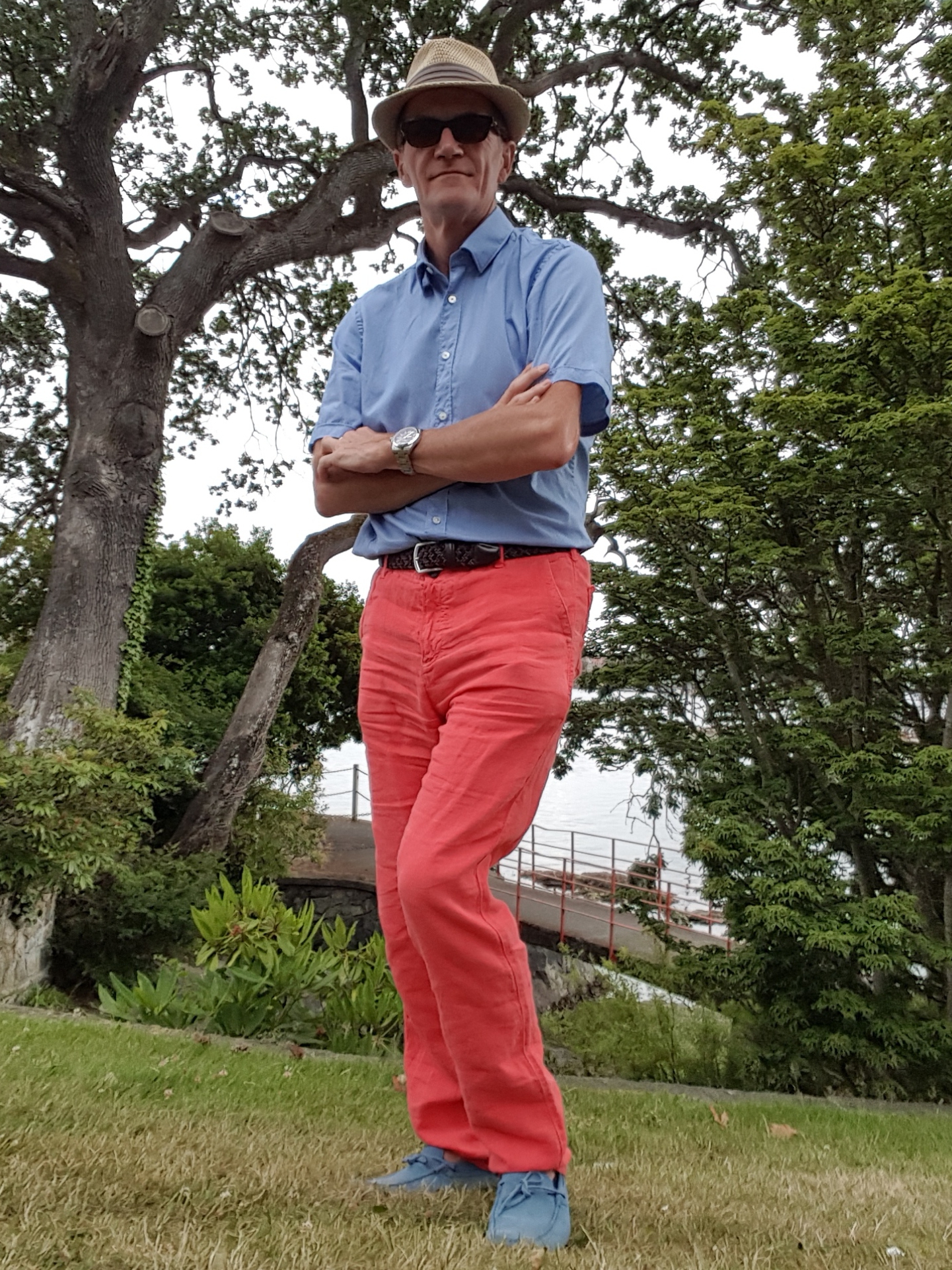
    20180719_141953

    Grocers and missionaries. That’s what flits across the mind’s screen when short-sleeve shirts are mentioned. One looks uncomfortable in the air-conditioned store, the other impossibly comfortable in the heat of the neighbourhood. And that’s why short-sleeve shirts have always been anathema.

    Now, Michael Douglas did wonders for two-tone collars in Wall Street and sparked a whole fashion trend. In marked contrast, the vastly underrated Falling Down had the reverse affect – the uniform he wears marks him as a beaten man and no one wants to voluntarily don that garb.

    In fairness, one man made the white short-sleeve look authoritative – Ed Harris as Gene Kranz in Apollo 13. Other than that, not so much. It became a costume that identified folks as drones, many even replete with pocket protector.

    Perception is changing this perspective, due to age and heat in equal parts.

    Here in Victoria there’s been something of a heat wave or as much of a heated stretch that can be inflicted when there is a constant sea breeze that flutters from flirtatious to ferocious. But it was warm. And the workplace is a 100-year-old rock pile that doesn’t accommodate modern convenience to keep everyone cool.

    So short-sleeves are welcome aid in getting respite from the sun’s tender touch, as direct contact is better than sweaty cotton. Those are the practical reasons.

    With age, it seems, comes a lack of fussiness. Rules that must be strictly adhered to can be slightly altered to circumstances. But one hard and fast rule: collared shirt at work, so no one confuses you for a tourist (to be fair, tourists often look like they are headed for a day at the beach and that is acceptable but only if you’re taking up residence beside water). With that non-negotiable, long sleeves do seem cruel and polos, while offering versatility, often lack any panache.

    Drone no more, however, as white short-sleeve shirts are no longer the sole choice open to those battling the temperature. Where dress shirts tend to express personality through colours (white, blue or daringly pink) and the occasional pinstripe (sometimes a pink one), today’s summer shirts offer colours and patterns that would be verboten with a suit and tie. And that’s what they are: summer shirts.

    If your residence is the Caribbean or similar climate, then disregard and consider them appropriate for the year long.

    For the rest of us, it’s a time to indulge. Colours that work because the skin pigment has some tone, a chance to wear a stripe horizontally or odd geometric shapes are all fair game. Up until just about Labour Day.

    The relaxation of rules, of course, only goes so far. Some tenets are unbreakable. Unless you are wearing a white short-sleeve shirt, then a necktie should not adorn the neck. It just looks weird and creepy. If a grocery store manager, missionary or NASA administrator, then white shirt and black tie is perfect. Also recognize which shirts work tucked in and which don’t. And Hawaiian shirts are awesome – when in Oahu. Cuban collars are great on holidays.

    There, feel better already. Enjoy the sun, soak up the rays and feel the wind blowing the heat on arms unsleeved. Bask in the warmth while being cool.

    Oh, one more summer rule, no matter how trendy it appears – socks and sandals, no.


  • ‘They Don’t Suck’ – a fan’s life

    _IMG_20180707_111457
    Highs of past, hope for new ones

    There was a time when this humble scribe trod the boards of local theatres. Not out of an abundance of talent, mind you; more because a male willing to do community theatre was a rarity and snatched up with nary a query. At the same time, the Prince George Cougars were moving into a new home and for that inaugural year yours truly was the rink announcer. This collision of passions made for interesting and, shall we say, spirited conversations.

    For the creative types, it was frustration in being hosted in an old facility that harboured a host of idiosyncrasies and severely hindered the scope of production, if you were lucky enough to use it. In contrast, the Cougars (recent arrivals from Victoria) were being showcased in a facility that cost $21 million to construct in 1994.

    One night, after rehearsal in a church sanctuary that was used for performances, the director – it was Crossing Delancey being staged – asked why such sums were expended on an athletic endeavor but not an artistic one. Simple answer: you can’t draw 6,000 people for 36 nights.

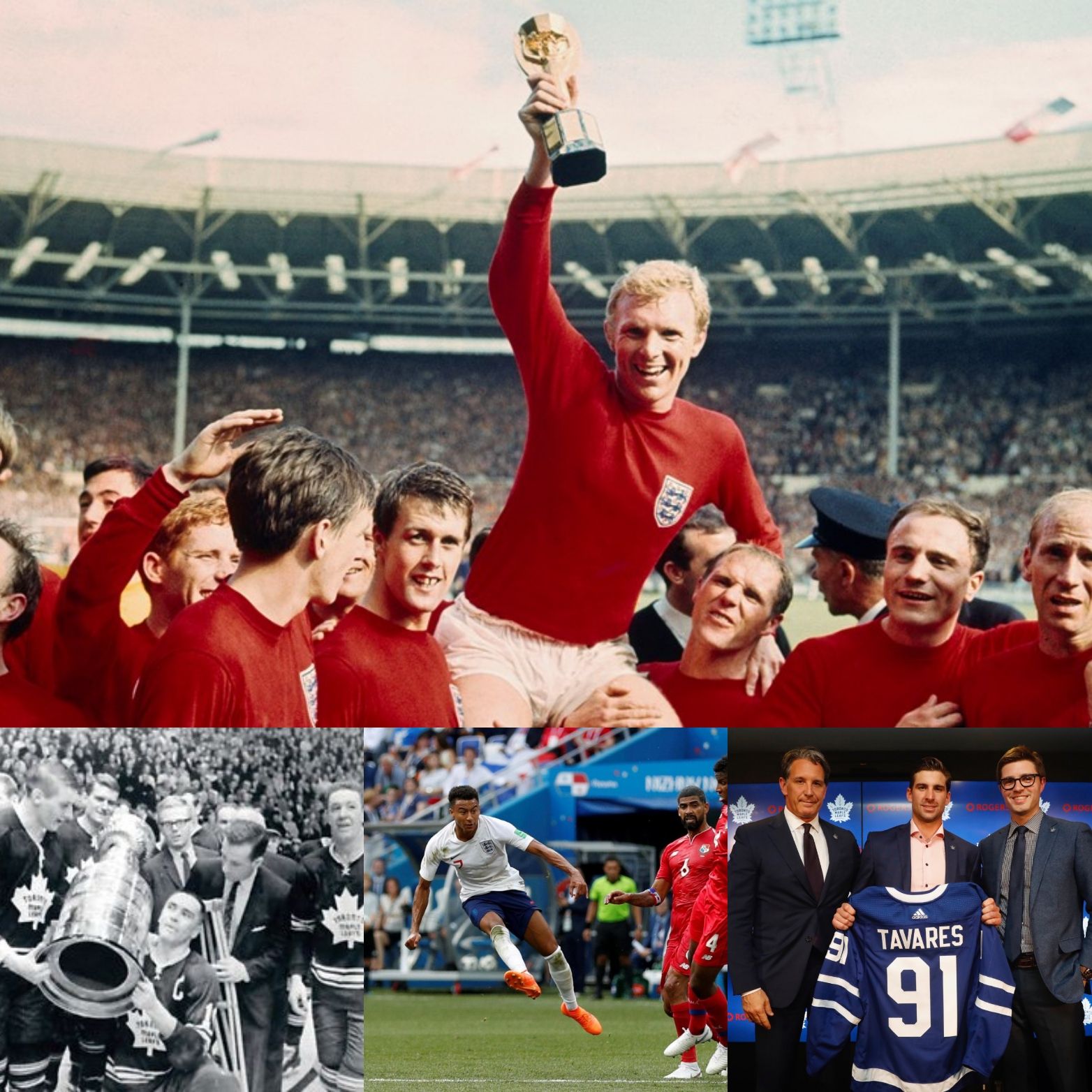
    This conversion of passion into structure has been at front of mind lately. There’s the World Cup, there’s Wimbledon and, of course, the signing of John Tavares to the Toronto Maple Leafs. It’s a reminder of the very good reason the word fan is derived from fanatic.

    Now lots of people are devotees of experiences other than sports: gamers, cosplay, knitters, ballet, stamps, fashion or the Society for Creative Anachronism. But none of those have the ability to unite in the way sports do. Every four years, we rekindle an interest in obscure winter sports. When the Canadian women won soccer bronze at the London Olympics it was shared coast-to-coast. And those old enough will remember the Blue Jays capturing back-to-back World Series titles.

    This edition of the World Cup has ably demonstrated the power of sport to unite. Walk into a pub and the shyest will join the celebration, fist pumping and obscure facts pouring out to fill any gaps. As an England devotee, moments of pure terror have mingled with sheer bliss. Against Colombia, the tension as the lineup began for penalties was excruciating but best shared.

    It was the same with the signing of Tavares. A legitimate superstar who is still in his prime doesn’t ink a contract in Toronto – it simply doesn’t happen. So when it does, there is a tendency to want to start charting a parade route.

    Some teams manage to be ‘lovable losers’ – such as the Chicago Cubs for all those years and, to be honest, the Saskatchewan Roughriders – and some are just losers. That category would host the Maple Leafs and England, rich teams that live, seemingly, on past glories. And the timelines are eerily similar.

    The Leafs last drank out of Lord Stanley’s mug on May 2, 1967 and Bobby Moore hoisted the Jules Rimet Trophy on July 30, 1966. For both of these occurrences, your correspondent was alive. When England won my first breath had comes seven months before; the last Leaf win came at the ripe old age of 17 months.

    Since then, mostly suffering. Glimmers for sure. Leafs of Sittler and MacDonald, of Gilmour and Clark (damn you, Kerry Fraser) whetted the appetite; the Three Lions were even more tempting – as the teams of Gascoigne and Lineker gave way to the Golden Generation. But heartbreak always.

    From a boy growing up and watching the Leafs in black & white to a year living in England when the memories of winning were fresh to a familiar pattern: they look pretty good, think they might do alright, they suck, and what did you expect.

    Butt of jokes. Squads cringe-worthy in badness. It builds character for the true fan. And the suffering is part of the payoff.

    Take American football: if you’re a recent fan of the Patriots or the Packers, I feel bad for you. There are dark times to come and be prepared. As a Steelers fan, yes there are the six Super Bowls; there is also Bubby Brister, Kordell Stewart and Tommy Maddux to name a few who came between Bradshaw and Ben.

    That’s why this World Cup – and waiting till after the quarters and publishing before the semis was deliberate – is so much fun. There was talent there, obviously, for England; there was a likeability and toughness due to the way many of the players fought into the top echelon; and then a path opened up – partially by the players and, yes, by the football gods who decided Germany, Brazil, Spain, Portugal and Argentina should go home early (not to mention Italy and Holland not qualifying).

    So Wednesday will be a moment to bask – this time they didn’t suck. And that’s a win. Then there’s 82 games with Tavares in the blue and white of Leafs Nation. Another win.


  • Race routines and rituals

    Maybe it is the Catholic base. But rituals are good. Certain actions, in the right moment and right order, bring calm to chaos. Rituals performed with practiced ease, no matter the environs, breeds a familiarity that places a person in the right space.

    Now, ritual should not be confused with routine. Getting up at 5:30 a.m. in the morning like clockwork, that’s routine. Sitting down on the same park bench, pulling out the same ham and cheese sandwich at a few minutes after noon each day and slurping the same brand of pop, that’s routine. Having one dedicated pub/date night, yes, is routine.

    And ritual is not superstition, perish the thought. Walking under a ladder won’t bring bad luck, though an object could be dropped on head and that would be an appropriate prize for not respecting why there was a ladder erected in that location. Black cats, again, get a bad rap. And when was the last time Friday the 13th turned into a personally harrowing day.

    Rituals are often associated with athletes and entertainers. Hockey players, especially in playoffs, will get dressed the same way item by item; playoff beards are so ubiquitous they veer into cliché. Other athletes have similar routines/superstitions around first on the court/field and last off. With a season that stretches through three, baseball habits by default become superstitions – like never stepping on a foul line.

    And woeful weekend warriors are not immune to routine or ritual. As something familiar, they act as needed crutch for those who would need the aid.

    Spurring these reflections on race routine and rituals is the arrival of the BMO Marathon weekend and the fact more than 17,000 people will avail themselves of one of four options (marathon, marathon relay, half marathon or 8K). All with an objective in mind, all who have planned out the journey and now is the time for planning to recede and reality to intrude.

    That’s why routine and ritual is so essential.

    Take the pre-race meal. For me, routine means that over the course of the last few months the body headed out the door for Sunday long run at 8:30 a.m. so as to mimic when the marathon gun will go off. Each time it was the same meal, taken at the same interval and the same nutrients were consumed on the run.

    Here in Vancouver all those ingredients for breakfast were brought over as the routine is meant to ensure that tomorrow the body is used to the hour and to what’s being ingested – with the goal that dedicated repetition should alleviate any tummy troubles.

    Routine also leads to caution, as all those hours pounding the pavement have thrown up all kinds of unexpected situations. So in the bag today: two pairs of socks, headphones and backup headphones, short-sleeve shirt and long-sleeve shirt (weather forecasters seem as accurate as economists, just saying), along with blister cushions, full variety pack of bandages, small bottle of Vitamin I and Voltaren and IcyHot just to cover all bases.

    And it is clear training is all about habitual behaviour. If it’s Monday, it must be yoga and recovery. If it’s Thursday, it’s speed work. Well, no need to go through the week. But in that schedule lies success. Slowly, surely the results are seen. It’s what keeps motivation high. Today I can go farther, faster than I did last practice.

    Rituals, though, are more symbolic. On the surface, they appear as if they will make no difference to the outcome. However, the idea of the ritual when performed fuels the imagination and as any runner knows the mental is as important as the physical (as tomorrow will, hopefully, be first time completing 42.2 kms I’ll confirm then).

    The pre-night meal and the idea of carbing up! It literally feeds the body and mind. Pasta is a popular choice for many. Greek – chicken souvlaki to be exact – is my preference. It’s got everything – protein, carbs, veggies and a glass of red wine. It’s comfort nutrition and there’s no way that’s changing now.

    Another ritual – purchasing of a new shirt for the race. No different this time, with white the chosen colour. Is it necessary? No. Neither is purchasing new socks for each big race. But it is still done.

    (Small diversion: rituals are not for every race, at least for me. They are for those that command the attention and where a PB or another milestone is desired. So BMO qualifies, so will Scotia Bank Half. Races used as prep only get routine, not ritual.)

    As the starting line looms large and the finish line seems so very distant, there is a dawning realization that it will be the routine that ultimately leads to success. It’s that routine of putting foot in front of foot in front of foot for short bursts and long sequences that has built the stamina. It’s slogging it out in the rain and wind and knowing you can keep going, even if you have to drop the shoulder and plow through like Earl Campbell.

    Rituals make it special, routine make it possible. Tomorrow here’s hoping it was worth it for all runners.


  • 5K Fever

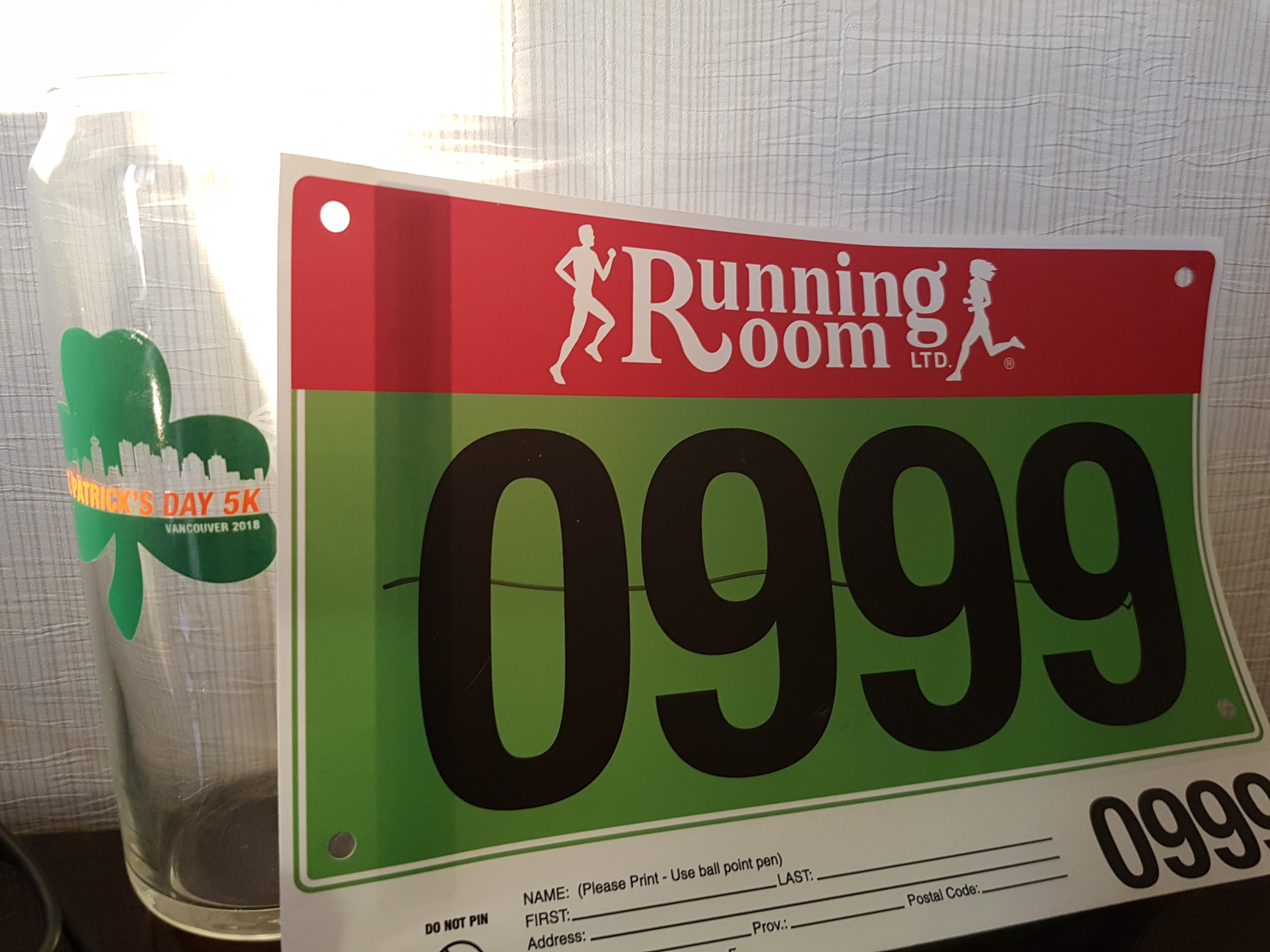
    20180318_185854

    Fast is not a word associated with this runner. Despite the exhortations of elementary school peers, the skinny kid was not quick. That’s been long sorted. Years have not changed that. And that’s why longer distance have always appealed over shorter ones.

    Cross-country practices in Sunnidale Park as a high school student were a fun slog. Plodding along at a steady pace was my custom. Never too fast, never too slow. And it worked out with a couple of top 10 finishes in GBSSA.

    Then, though, basically there was a 30 year gap between exertions. The body slowly, as my dear old Nan said so graciously, filled out.

    So when being fat was too much of a burden on these old bones and the need to get back into shape took precedence, completing five kilometres without having a jammer was a goal. Then came the ability to finish 10K, followed by half marathons. And now, fingers crossed, a full at BMO Vancouver Marathon.

    But all the goals were built on the memories of youth, distance was good. Short distances were not in the wheelhouse. Back in the day there were lots of conversations had on short twitch muscle fibers versus long twitch. Short twitch was the reason for running long, lack of fast twitch was a genetic quirk that determined the distance. I was a weird kid, admittedly.

    Training, though, has provided different perspectives. How do you have a kick at the end? Do you want to mix up distances heading into a big race? Does the body benefit from taking a different approach on the odd weekend?

    The answer seems obvious now. As an old man running, turns out variety is really the spice of running life.

    It also occurred to me that shorter races for some reasons are for some reason given short shrift. Oh, just did 5K or 10K is a common refrain. As somehow that is less legitimate than the half or full.

    Pause for moment and think, other than Usain Bolt, who is the most famous runner in the world. It’s Mo Farah, more accurately Sir Mo Farah. And what did he run? The 5,000 metre and 10,000 metre. Fancier sounding names but still 5K and 10K. In 2012, he won Olympic gold in the 5,000 in 13:41 and in 2016 he did it again in 13:08. In the 10,000, he won Olympic gold in 2012 in a time of 27:30 and in 2016 repeated it in a time of 27:05.

    He’s a runner. The 5K and 10K are real races.

    That was brought home this weekend during the St. Patrick Day’s 5K in Vancouver. It was the first time racing this distance. Everyone says 5ks are great – “You can just go for it from the start.” It’s not that simple.

    On longer distances it is easier to slide into pace. Think of it as a freight train: takes a while to get going but then it can be tough to stop, it has momentum and keeps going at a steady pace. Changing into the 5K mode is more challenging. The bullet train needs a quick start but the lungs need to be ready for it; too quick and it is easy to get derailed.

    On the weekend, this freight train just about burst a gasket. But it also helps make for a better runner. There was a host of runners who passed by earlier on the trek through Stanley Park. Quick off the mark was the objective for them. In contrast, the pacing that helps in the longer distances proved helpful in the end.

    As folks passed, the internal conversation was clear: run your race, run your pace. Doesn’t matter that some tween just passed you, remember you’re racing against the clock. And it worked. Some were overtaken. Some weren’t. But that’s fine. As an old guy, the race is against self not others. The goal was to essentially match best 10K time. Mission accomplished.

    It was also nice to have a complement to the long runs of the weekend, as it takes the long distance runner out of the comfort zone of plodding along. As a solitary runner, who tries to incorporate input from reading a lot of running magazines, it’s clear that mixing distance races will improve this mature runner who suffers from slow twitch affliction.

    So while May 6 is the BMO Vancouver Marathon, there is another 5K on the agenda (one day after returning from Vegas, so also sort of a detox) and the TC 10K. It can’t hurt. After all, Sir Mo is now gunning gunning to win the London Marathon. So the 5K is a real race and no one should ever apologize for it.


  • Alarming technology

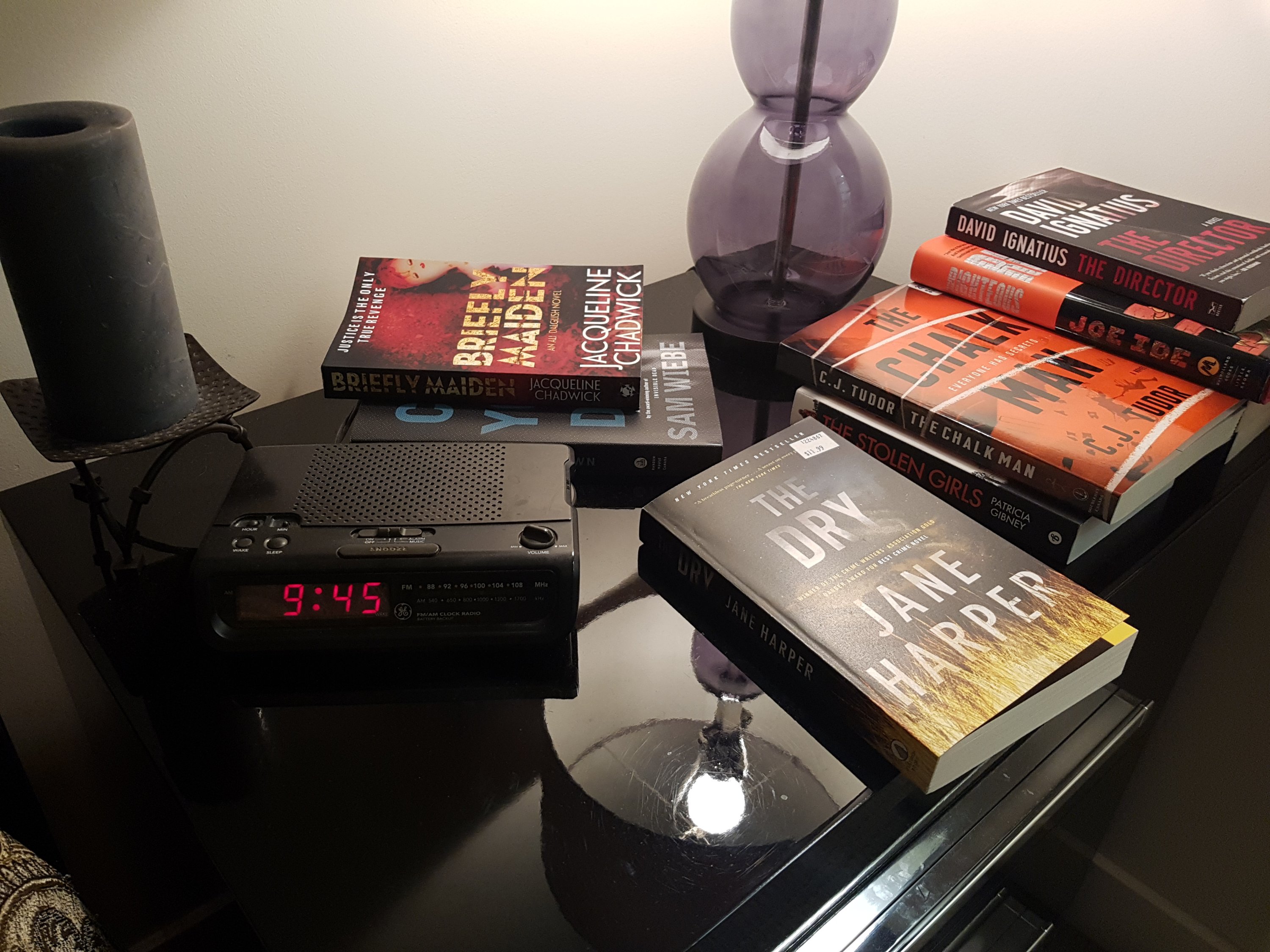
    This is an alarm clock. Those of a certain vintage will be familiar with the red glow that heralds a new dawn every 24 hours. Others will recognize it as the relic on the parents’ bedside table. I see it as a foreboding harbinger of automation.

    This weekend, British Columbians – like most Canadians – saw clocks spring ahead. But nowadays, there is not much work to be done. Once upon a time, usually just before bed, it was required to go room to room and manually set time forward. Present day, not so much. Other than the alarm clock, only the microwave/oven combo needed to be adjusted in the apartment this weekend.

    (Watches don’t count. A nice timepiece is worth the occasional adjustment. If you don’t have a watch to adjust, consider getting one. They are worth it. Digression complete.)

    The alarm clock serves limited purpose. It’s not smart. It can’t tell the good folks at BC Hydro how much power is being used. Retailers can’t gauge spending habits and flood with internet ads. No one is going to decipher internet history from it and judge. It tells time. It will wake you up. And it will play music, if you pick the radio station option. It performs simple tasks; it is not a multi-tasker.

    After smacking the snooze one morning recently, a realization dawned – this one piece of electronics (aside from baby pics) has travelled across the country several times, hit hot spots like Kapuskasing, Timmins, Regina, Quesnel, Prince George and Victoria.

    It is the one constant in life. It’s been bedside for almost 35 years. It represents a different time.

    Life for this benign object began in Barrie, Ontario. Not just the purchase, but all the components were put together in a General Electric plant that was situated right beside Barrie Central Collegiate. It employed men and women, provided good-paying jobs and didn’t require a university degree. It was possible to finish school, jump the fence and start a new job the next day.

    GE provided dinner on our table for many years. Then work started to shift. Overtime slowed. Then one morning, the plant was closing – after 40 years of operation.

    When this clock finally comes to an end, the replacement will be very different – if there is even a new one. The smart phone, steadfastly always at the ready, can do the job even while its owner is asleep. Or fancy new alarm clocks – with Bluetooth and music downloaded from satellites. Whatever it is, it won’t be as quaintly unsophisticated.

    And therein lies the tech terror – with each new edition it morphs into taking over more of everyday life. We acquiesce, not silently; rather with full-throttled enthusiasm, spending thousands on devices all designed to make life easier.

    As a matter of individualism, it is brilliant. This is being written on a Surface, a Gear S5 Frontier is attached to the wrist tabulating steps in the day, heart rate, providing immediate weather updates (like what is wrong with using the window) and the Galaxy S7 sits plugged in beside. PVR streaming up last week’s Coronation Street episodes. And runs are conducted with aforementioned smartwatch and Bluetooth headphones.

    Technology is good.

    Technology is bad.

    That plant employed in Barrie employed up to 600 people. When irons, kettles and alarm clocks stopped being completed, families were thrown into disarray. It’s now a mall. And the high school is closed.

    Resource towns also face challenges due to technology.

    In Kapuskasing, for years they were the proud producer of all the newsprint for the New York Times. Demand for newsprint has since dropped, slightly.

    In towns across British Columbia, new mills are welcome investments but they also usually mean – ultimately – fewer people needed. Back in 1992, at the Canoe mill in Salmon Arm, the woodlands manager shared they produced more wood than ever and did it with a smaller workforce. That practice has grown, not shrunk.
    Being a bag boy at the local grocery was a good weekend job. Cashiers made fair wages to get you through the lineup as painlessly as possible. Presently, those jobs are being replaced by scanners. Convenient? Yes. Cheaper for the shopkeeper? Definitely. The only loser is those who no longer have those jobs.

    Amazon is piloting a store that needs no checkout at all, all cameras and all connected. Walk-in, pick up your goods and walk out. Then check to make sure you got the special, as the money will already have flowed from your account.

    Technology is not evil. It does though have repercussions.

    President Donald Trump’s foray into tariffs as a way to rebuild American jobs is doomed.

    Those steel towns will never boom that way again; they can thrive and mix in new enterprises with the old stalwarts. First though is conceding progress morphs into something unexpected.

    Way back when, that little alarm clock – which now acts as a symbol of caution – was a pretty fancy piece of tech. Now the smart watch – if the owner was smarter – could probably launch a nuclear attack. Robots are seemingly being prepped to take over every job imaginable. Luddites need not rise up and SkyNet has not darkened at the door.

    Spare some thought about the impact technology is having, as it could impact your life in an alarming way.

  • Darn it, express yourself

    20180304_133513.jpg

    Darn it. For most, it is now a polite way to escape a swat from grandmother when you really want to say damn it or something even more graphic. It’s a mild expletive, a way to voice frustration. But it is so much more.

    Little House on the Prairie aficionados or, more currently, fans of When Calls the Heart are likely to read a much different meaning into darn it – as in it is a call to action.

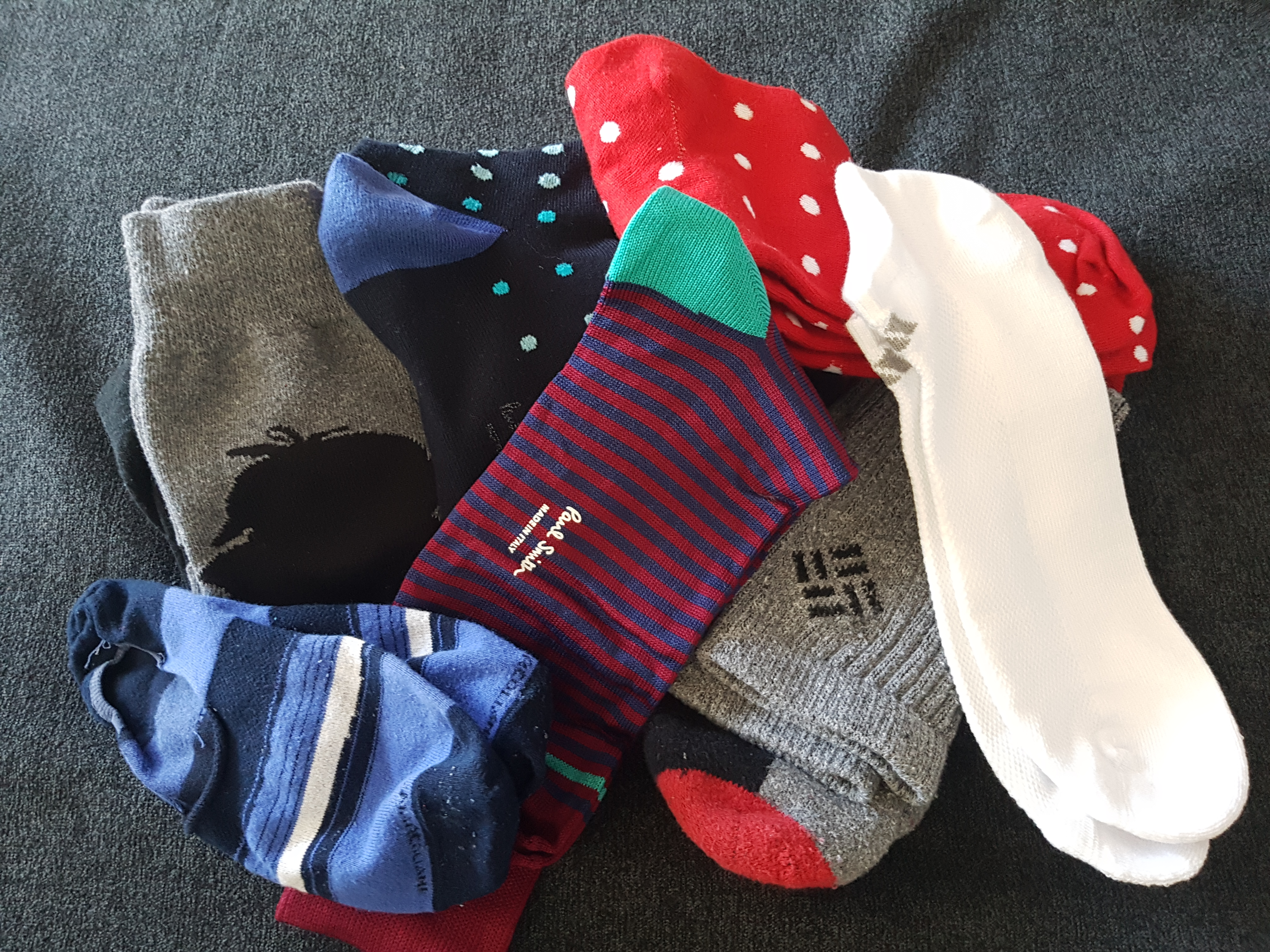
    Small hole beginning to peek through the heel, never fear. Darn it – that’s the long abandoned practice (there’s wikiHow video here for those who may want to revive the ancient method) of mending socks. My modern custom is to bundle them up and toss them into the bin. So fear not, the point of today is not to extol the frugality of repairing ripped hose.

    But bemoaning the loss of another pair has made me reflective on how far socks have come and now represent a form of simultaneous individualism and conformity.

    Socks, in younger days, were not given much thought. Without fail at birthday and Christmas a package would arrive from Nan, card containing 20 pounds and in the package a three-pack of white tube socks from Woolworth’s. Set for the year.

    The only addition was a couple of pair of black socks for Sunday best occasions, including church. That was it.

    Now the sock drawer is more multi-coloured than ever. Socks no longer are utilitarian. They each serve specific uses.

    There are the socklets for athletics, used for running and racquet sports. There are no-show socks, used for when donning loafers, driving shoes or espadrilles. Then there are the work socks, made of tougher materials for boot wearing and then the odd fun pair of hosiery. Not to mention the everyday dress sock which is part of the uniform.

    Socks are a necessary evil. Key to preventing smell, stopping abrasions on the foot and hiding the paleness of the skin (especially during winter). They are also immensely frustrating. Forever falling down, the only known way to prevent being garters across the top. A short shelf life seems as if they were designed by a tech company. And we all know white socks and sandals are simply scandalous.

    But as banal as they became in the 20th century, it wasn’t always so. Any fan of history will recall paintings of kings and warriors decked out extravagantly. Upon the conduct of a little research (Google), Wikipedia threw this up:

    During the Middle Ages, the length of trousers was extended and the sock became a tight, brightly-colored cloth covering the lower part of the leg. Since socks didn’t have an elastic band, garters were placed over the top of the stockings to prevent them from falling down. When breeches became shorter, socks began to get longer (and more expensive). By 1000 AD, socks became a symbol of wealth among the nobility.

    When it comes to men’s wear today there is not a lot of options to add flair, without tipping over into the overly extravagant. Suits hew to basic hues with the odd variation of pattern, check or lines. The NBA-splash of colour suit is not an option open to many – garish works in the underground hallways of an arena when you’re a multi-millionaire, not so much in the cubicle most of us occupy daily.

    Currently, the President of the United States wears ties in a way seemingly designed to compensate for inadequacies. Our prime minister likes to be cool with novelty socks, attracting attention to heel over head.

    Trend towards novelty socks isn’t new. And maybe it is fuddy-duddy thinking but for the most part they have no part in a gentlemen’s every day wardrobe. Colour, yes. Stripes, of course. Geometric shapes, intriguing and appropriate. Elmer Fudd, not so much; not on your tie or your feet.

    So the small accessories become more important – the tie, tie bar, the pocket square, lapel pin and, of course, socks. Key is understanding that restraint works with accessories – tie bar, pocket square and vest all together is too much.

    Socks perfectly matched to tie colour is not necessary, in fact better not to. Take a hint of the colour from the noose around your neck and see it reflected in the bottom of the ensemble. Maybe play off the pocket square. Tie (pardon the pun) the whole outfit together.

    Which is not to say there aren’t moments for fun socks. Mona Lisa and Sherlock Holmes shod these feet, on the weekend. They can be fun. And if a trip to the Louvre or 221B Baker Street materializes, they will be included in the trip. A great pair of Christmas socks also brightens any holiday season.

    But if you’ve built the rest of your wardrobe so people see competence and elegance in perfect harmony why ruin it with wildly goofy socks every day? It’s disconcerting and jarring.

    Unless, of course, you are interviewing Mark Hamill – then get your geek on.


  • Cover-up: Beach bod edition

    20180111_080113

    Apologies. Let’s begin there. No one should really have to see the above picture. That’s the point. Topless seems self-indulgent, an attempt to parade confidence that often – to the subjected viewers – seems misplaced.

    Men who look to be transporting an afghan rug on their back; fellows who possess man boobs that should be measured as size-long; beer bellies that explode forward with the power of a luger; or the conclave chest offered up to suggest physical archetypes don’t matter. We all know it when we see it. Not everyone is a Men’s Health cover model.

    For purposes of today, the topic covers only the male form – not wading into the issue of female toplessness. Not out of prudishness, but a preference to contain comment to experience known first-hand and I am lacking any experience as a woman (save that one time Dressing Up as Madonna and lip syncing for United Way in high school).

    This incredulity as to why so many men feel the need to throw off the fabric yoke is long-standing. But of late it has come to mind more frequently; specifically while running and also practicing yoga. “Put on a shirt,” the inner voice screams.

    Part of the problem is yours truly has never had a ‘beach bod’ – ever. There is the scrawny kid with chicken legs, followed by the ‘belly hits the water about 30 seconds before rest of body’ phase and then there’s the scrawny adult with pipe cleaner arms.

    Back in the scrawny kid era, there was an attempt to move from the pre-Charles Atlas look (kids, go to Google for explanation, we’ll wait) and into the brawny category. Off to the gym, sweating to lift light weights and seeing glistening bodies encased in Lycra admiring themselves in the mirrors. But the one fellow who took pity on the skinny nerd was clad in grey sweats – top and bottom.  The only clue to his strength was the accumulated discs on the barbell. Dale, it turns out, was a serious bodybuilder; not Mr. Olympia calibre but a competitor around southern Ontario. So, the obvious question for a teen, looking for muscles to show off, to guy a like Dale: why aren’t you putting these dudes to shame? His answer, remarkable in its simplicity: ‘I don’t do it for them, I do it for me.’

    That has stuck with me. And now it makes more sense than ever. Finally getting fit was for me. But even as the weight drops and vigour increases, the desire to rip off the top à la Hulk Horgan remains foreign.

    Putting aside my aesthetic aversion to no shirts in public, there are practical reasons as well to cover up that beloved beach body.

    When running, a shirt is handy to wipe sweat and useful if a tumble is taken. It also prevents any unintended blindness due to the sun reflecting off the white. Will acknowledge that avoidance of a farmer’s tan is good, so sleeveless shirts are appropriate.

    At the gym, a door not often darkened, it keeps the sweat off the equipment and makes it a more pleasurable experience for all sharing the space.

    Yoga is a more perilous area to wade into to. The studio where I practice has a healthy dose of male practitioners. Many hold a flexibility that fills one with envy; but many also practice without a shirt. When doing slow flow, there is a lot of holding and staring – having the eye trained on a patch of pasty white or intricate ink designs is unappealing to me. Again, a sleeveless shirt allows freedom of movement and mopping of perspiration. Maybe I sweat more than others.

    Now, maybe the antipathy towards those not wrapped up is because in spite of shedding 70 pounds there remains a bike-sized inner tube layer of fat that refuses to disappear. That skin had been stretched so far – think ability to show movie on it – that it rebuffs all attempts to reveal the abs underneath. A horrible cross to bear, I know. Sympathy not expected.

    Which is not to say shirts should be stapled on and never removed except for bathing. Showing off the body versus enjoying the moment: therein lies the difference.

    The above picture was taken in a plunge pool in the Dominican. Swimming in the ocean and pool was done sans shirt. Lounging with a rum and coke was also done shirtless. However, walking back to the room or heading for brunch saw a t-shirt slipped on. Out of respect for fact not everyone wants to see too much of this body.

    It is possible there is a little bit of the prig coming to the fore here; Europeans have a much different approach to highlighting the body, usually involving very small swimsuits that appear more torturous than pleasurable. That was on full display in the Dominican.

    Maybe it would be different if young and buff was reality, instead of old and trifling as the above photo attests.

    So, as the inner voice wanders into the real world, a final word to all those men who want to share the physiques they believe to be fabulous – don’t. Remember, just because you can do something doesn’t mean you should.